If you’ve ever held a wrench, a car engine connecting rod, a bolt for heavy construction, or even a farming tool that withstands repeated hard use, you’ve held something made with piercing in forging. For most people outside our metal forgings world, “piercing” might sound like a sharp, sudden hole punch, but in our line of work, it’s one of the most precise, essential steps in forging parts that don’t just look sturdy—they perform reliably under extreme pressure, temperature, and wear. As a third-generation metal forgings supplier, I’ve spent 18 years in this space, watching piercing turn raw metal billets into parts that make up everything from construction cranes to agricultural harvesters. It’s not the flashiest step in our process, but it’s the one that can make or break a part’s entire usefulness. Metal Forgings
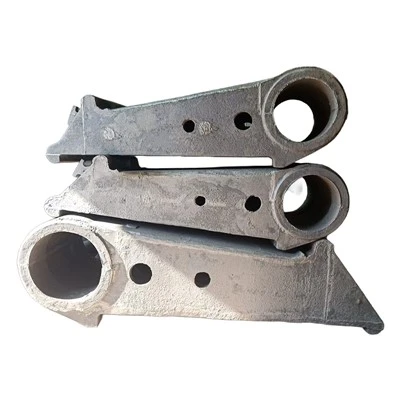
Let me start with what piercing actually is, beyond the basic definition. When we forge metal, we don’t start with a finished shape—we start with a solid, cylindrical or sometimes rectangular billet of alloy steel, stainless steel, or even aluminum, depending on the customer’s needs. Piercing is the forging operation that creates a hollow cavity or through-hole in this solid billet, right after we’ve heated the billet to its forging temperature (usually between 1,100°C and 1,250°C for most carbon steels, hot enough to make the metal malleable but not so hot that it becomes brittle). The key here is that piercing isn’t just drilling a hole—drilling is a subtractive process where you cut away material, leaving a hollow space. Piercing is additive and formative: we shape the metal itself to move material from the center of the billet outward, rather than removing it. That might sound like a small difference, but it changes everything about the part’s strength, grain structure, and durability.
I learned this difference early, working alongside my dad in our small shop back in 2005. We had a customer making large-diameter bearing sleeves for mining equipment, and their initial order used drilled sleeves. Within six months, 12% of the sleeves failed, the inner walls cracking under the constant vibration of haul trucks. My dad took a sample to a metallurgist friend, and the diagnosis was clear: drilling disrupts the metal’s grain flow, the natural linear structure of the crystal that makes metal strong along its axis. Piercing, on the other hand, aligns that grain flow around the inner cavity, so the grain follows the shape of the part instead of being cut through. We re-forged the order using piercing, and not a single one failed in three years of use. That moment sold me on piercing as more than a technical step—it’s a way to build reliability into a part from the very start.
Now, there are two main types of piercing we use in our shop, and the choice depends entirely on the part’s size, application, and the metal we’re working with. The first is punch piercing, the most common method for smaller to medium-sized parts. Here, we take a heavy, hardened steel punch—shaped exactly like the inner cavity we need—and drive it straight into the heated billet. The punch applies thousands of tons of force, pushing the center of the billet inward and downward, while the surrounding metal flows upward to thicken the outer walls. For parts like bolts or small connecting rods, punch piercing is fast, consistent, and leaves a clean inner surface that only needs minor machining afterward. Back in 2012, we landed an order for 50,000 axle pins for a municipal bus manufacturer, each needing a 20mm through-hole. Punch piercing let us hit our 2,000-piece daily production target without sacrificing consistency, and the manufacturer has renewed that order every year since.
The second type is ring piercing, used for larger, thicker-walled parts like flanges, pressure vessel heads, or the outer rings for wind turbine bearings. Punch piercing would be too forceful and would create uneven inner walls on these large parts, so ring piercing uses a two-step process: first, we punch a small pilot hole in the center of the billet with a narrow punch, then we slide a pointed ring mandrel through that hole. We then rotate the billet as we press the mandrel outward and forward, gradually expanding the pilot hole into a large, uniform inner diameter. This method keeps the grain flow perfectly aligned around the entire inner and outer edges of the part, which is critical for parts that hold pressure or rotate under massive loads. I remember our first large ring piercing order in 2018: six 1.2-meter diameter flanges for a hydroelectric dam project, each requiring a 600mm inner diameter. If we’d tried to punch that with a single tool, the billet would have cracked from uneven force. Ring piercing let us achieve the exact wall thickness and grain structure needed, and those flanges have been holding up for five years in the dam’s high-pressure pipeline system.
One of the biggest misconceptions new customers have about piercing is that it’s a one-size-fits-all step. That couldn’t be farther from the truth. We have to adjust every variable to match the part’s purpose: from the type of metal, to the forging temperature, to the speed of the punch or mandrel, even to the way we support the billet as we pierce. For example, when working with stainless steel—common for food processing equipment or marine parts—we have to lower the forging temperature slightly and use a lubricant specifically designed to prevent the punch from sticking. Stainless steel work-hardens faster than carbon steel, so if we pierce too quickly, the inner walls will be too hard and prone to cracking. For aluminum, which is softer and more malleable, we use a slower punch speed to avoid tearing the inner surface, and we often add a small amount of draft to the punch so it doesn’t get trapped in the cavity after piercing.
We also have to account for the final machining the customer will do. If a part only needs minor finishing on the inner walls, we can adjust the piercing force to leave a slightly thicker inner wall, so the machining process doesn’t disrupt the grain flow. If a customer needs a perfectly smooth, precision inner surface, we’ll use a honing process after piercing, but the underlying grain structure from piercing remains intact. Last year, we had a customer making hydraulic cylinder barrels for construction equipment, and they insisted on drilled barrels because they thought piercing would leave too rough a surface. We tested a sample, and after light honing, the inner finish was within their tolerance specs, and fatigue testing showed the pierced barrel was 30% stronger than the drilled one. They switched all their production to piercing, and their part failure rate dropped by 18% almost immediately.
Another important part of piercing in forging is the role it plays in material efficiency. When you drill a hole, you remove all that material as scrap—material that’s already been melted, cast, and heated to forging temperature, wasting energy and increasing cost. Piercing moves that material to where it’s needed: for a bearing sleeve, that’s the outer wall that supports the load; for a flange, that’s the rim that attaches to the pipe or shaft. That means less scrap, lower overall cost, and a lower environmental footprint. As a supplier that works with a lot of sustainable construction and renewable energy projects, that’s a big part of what we offer. Customers in wind, solar, and hydro all prioritize parts that are not just strong, but made with as little waste as possible, and piercing delivers on that.
Of course, piercing isn’t without its challenges. Even with decades of experience, we can run into issues that only come with close attention to detail. For example, if the billet isn’t heated evenly, with some parts too hot and some too cold, piercing will cause the metal to flow unevenly, leading to cracks in the inner cavity or distorted outer shape. Last month, we had a small batch of parts where the heating oven’s temperature sensor was miscalibrated, leaving the outer edges of the billets 50°C cooler than the center. When we pierced, the cold outer metal couldn’t flow properly, so the inner walls were off by 3mm on average. We caught it during a post-pierce inspection, re-heated the billets, and avoided sending out a bad batch—but it reminded me how critical every step leading up to piercing is. Piercing is only as good as the billet that goes into it.
Another common challenge is punch or mandrel wear. The force of piercing is so high that even the hardest tool steels wear down over time, especially when working with high-alloy metals that are abrasive. We have a maintenance team that inspects each piercing tool before every shift, measuring for wear and resurfacing or replacing tools as needed. A punch that’s just 1mm smaller than it should be will create a cavity that’s too small, forcing the customer to machine off more material and increasing their cost. A punch that’s slightly tapered will leave inner walls that aren’t straight, leading to premature wear in the part. That’s why we track tool wear down to the thousandth of a millimeter—small details that our customers don’t see, but that make their parts work correctly.
At the end of the day, what makes piercing so valuable is that it’s a step that balances strength, precision, and efficiency. It’s not a trick or a shortcut—it’s a fundamental forging operation that shapes metal to meet the demands of the parts that keep our economy moving. From the axle that carries a semi-truck down the highway, to the bearing that lets a wind turbine spin in 100-mile-an-hour winds, to the valve that controls water flow in a city’s pipeline system, piercing is quietly responsible for making those parts strong enough to do their jobs for years, even decades.
As a metal forgings supplier, our job isn’t just to supply parts—it’s to educate our customers on the steps that make those parts better. We’ve had many customers come to us thinking drilling is fine, only to switch to piercing and see their part performance improve dramatically. If you’re working on a project that needs high-quality forged parts—whether for heavy equipment, energy infrastructure, automotive, or industrial applications—don’t settle for parts made with generic forging steps. The difference that piercing makes is in the durability, reliability, and cost-effectiveness of the final product.
If you’re ready to talk about your next metal forging project, whether it’s a small batch of custom parts or a large production run, we’re here to help. We work with customers across industries, from small local machine shops to large multinational corporations, and we tailor every step, including piercing, to meet your specific needs and specs.
Aluminum Alloy Casting and Machining References
- Metallurgy for the Non-Metallurgist, 2nd Edition, ASM International
- Forging Processes and Design for Performance, ASM International
- “Grain Flow in Forged Components,” Journal of Materials Engineering and Performance, Vol. 12, No. 5, 2003
- Fundamentals of Modern Forging, Forging Industry Association
Sanming Hongfeng Machinery Manufacturing Co., Ltd.
As one of the most professional metal forgings manufacturers and suppliers in China, we’re featured by quality products and good service. Please rest assured to wholesale customized metal forgings made in China here from our factory. Welcome to contact us for quotation.
Address: No.2 Gaoyuan Industrial Zone, Chenda Town, Sanyuan District, Sanming City, Fujian Province, China
E-mail: smhfjxzsq@163.com
WebSite: https://www.smhfmachinery.com/
