If you’ve ever been on a cargo ship, a fishing trawler, or even a cruise liner gliding across the ocean, you might not have thought about the tiny, unsung parts keeping everything running smoothly down below. I’m not talking about the big, loud engines or the massive propellers that push the boat— I’m talking about valve shafts. As a valve shaft supplier, I’ve spent years working with these parts, and let me tell you, they’re way more important than most people give them credit for. Today, I want to break down what a valve shaft actually does in the marine industry, why it’s non-negotiable for every type of vessel, and why skimping on quality here is the last mistake you’ll ever make at sea. Valve Shaft
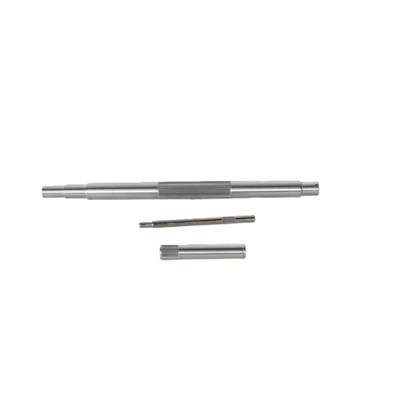
First, let’s get the basics right. A valve shaft is a long, metal rod that connects two key parts of a system: the valve itself and whatever’s driving it to open or close. In marine settings, that “driver” is usually a hydraulic actuator, an electric motor, or even a manual handwheel for smaller parts. It’s not just a straight metal stick, either— it’s machined to exact tolerances, coated to resist saltwater, and built to handle way more stress than your average car part. On land, a valve shaft might just open a water pipe. At sea? It’s handling fuel, seawater, steam, and even the compressed air that starts a ship’s engine. It’s the middleman that makes sure a valve moves when it’s supposed to, and doesn’t move when it’s not supposed to.
Now, let’s talk about where this thing shows up on a ship, because that’s when the real job makes sense. Let’s start with the engine room— that’s the heart of every vessel, right? The main engine, the generators, the auxiliary pumps all run on systems that depend on valves, and every one of those valves has a shaft. For example, the main engine’s fuel injection system: you need precise amounts of diesel sprayed into the cylinders at exactly the right time to keep the engine turning. If the fuel inlet valve’s shaft is bent or worn, the valve doesn’t open all the way, so you get too little fuel, or it opens at the wrong time. That leads to lost power, higher fuel bills, and eventually, a breakdown. I’ve seen it happen— a captain calls me in a panic because their 10,000-ton cargo ship is dead in the Atlantic, all because a cheap, off-brand valve shaft broke mid-voyage, cutting off fuel to the starboard engine. They had to tow it back to port, costing them thousands in lost cargo fees and repair time. No joke.
Then there’s the ballast system. Every ship uses ballast water— seawater pumped into tanks to adjust its weight and balance, right? When a ship’s empty, it pumps ballast water to make it stable enough to sail; when it’s loaded with cargo, it pumps that water out. The valves that control that flow are huge, and their shafts have to twist and turn against tons of water pressure. If a valve shaft seizes up, you can’t adjust the ballast. That means the ship could list too far to one side, become a hazard, or even capsize. I worked with a fishing trawler crew last year who thought their ballast valve shaft was fine because it moved a little when they tried it in port. But at sea, under the pressure of rough waves, the saltwater had eaten away at the uncoated shaft, and it locked solid mid-trip. They had to jettison half their catch because they couldn’t adjust the ship’s balance, and they almost didn’t make it back to shore. That’s the kind of risk you take when you cut corners on a valve shaft.
Don’t forget the piping systems for fire suppression, either. If a fire breaks out on a ship, every second counts. The valves that control the fire hoses, the sprinkler systems, the CO2 systems that smother engine room fires rely entirely on their shafts to activate them. If a shaft is corroded or misaligned, that valve won’t open when you need it. I can’t even imagine the tragedy if a ship lost its fire suppression because of a bad valve shaft, but I’ve heard enough near-misses to know it’s a real risk. Even smaller, everyday systems— like the freshwater taps for the crew’s quarters, or the valves that cool the engine— depend on valve shafts. There’s no part of a ship’s piping system that doesn’t have one, really.
Now, let’s talk about what makes a good marine valve shaft different from any other. First, it has to resist corrosion. Saltwater is a nightmare for metal— it’s way more corrosive than freshwater or air on land. So we use materials like duplex stainless steel, or nickel-aluminum bronze, which hold up against salt spray and constant immersion. It also has to be strong. Ships vibrate nonstop from the engines, the waves, the propellers. A valve shaft has to handle that constant twisting and pushing without bending or snapping. Machining is key, too— even a tiny burr or a misaligned measurement can throw off the valve’s seal, leading to leaks. Leaks at sea aren’t just a nuisance— they can lead to water damage in the cargo hold, fuel spills that hurt the environment, or even short circuits in electrical systems.
Another big thing: precision. Marine systems have to be super reliable, because you can’t just pull over and fix a broken valve shaft at 2,000 miles from shore. A good valve shaft has to transfer torque evenly, so the valve moves smoothly every time. If there’s play in the shaft, the valve might not close all the way, leading to leaks, or it might open too fast, causing water hammer— that sharp, pressure spike that can burst pipes or damage valves. I always tell my clients: you don’t want a “good enough” valve shaft. You want one that’s tested to handle saltwater, vibration, and constant use for decades. The best part is, when you get a quality one, it’ll outlast most other parts on the valve. I’ve supplied shafts that are still running after 15 years on ships that sail the world’s oceans.
Let’s also get real about the day-to-day maintenance, because that’s where valve shafts can sneak up on you. A lot of crew members don’t think to check the valve shaft— they oil the valve, but they don’t look at the shaft itself, checking for rust, bends, or play. I always advise ship’s engineers to do a quick inspection every port call: wipe down the shaft, check for any signs of corrosion, twist it gently to make sure it moves smoothly. Even a tiny spot of rust can turn into a big problem if left untreated, because saltwater creeps along the metal and eats through it from the inside. Last month, I worked with an engineer who caught a small corroded spot on a valve shaft during a port call. He just sanded it down and recoated it, and that shaft is still good to go. If he’d waited until he was at sea, he might have been in trouble.
Now, why does this matter for you, whether you’re a ship’s captain, a marine engineer, a shipyard manager, or even a cargo owner? Because downtime at sea costs a fortune. A single day of lost time on a large container ship can cost tens of thousands of dollars in lost delivery fees, delayed cargo, and charter costs. A bad valve shaft is one of those parts that can cause that downtime unexpectedly. I’ve had clients come to me after a breakdown, willing to pay double for a new shaft, because they know it’s cheaper than the cost of being stuck at sea. The same goes for safety: a valve shaft failure isn’t just a financial hit, it’s a safety risk for the crew, the cargo, and the environment. Oil spills from a failed fuel valve, or a cargo hold flood from a failed ballast valve, can cause long-term damage and huge fines.
I know there are a lot of places you can buy a valve shaft online, or from a cheap supplier, but let me tell you the difference. I’m not here to brag about my parts— I’m here to tell you what I’ve seen in 10 years of working in this industry. The cheap shafts might look the same, but they’re made with lower-grade steel, they’re not properly coated, and they’re machined to looser tolerances. They might work for a year or two in calm water, but then you hit a rough patch, and they snap. I’ve replaced shafts that failed after just six months, because the supplier cut corners on materials. A quality valve shaft is an investment, not an expense.
So, if you’re reading this and you’re in the marine industry, whether you’re outfitting a new ship, maintaining an old one, or dealing with a current breakdown, don’t overlook the valve shaft. It’s the small part that keeps the whole system moving, and it’s not something you want to mess around with. If you need new valve shafts, or you’re just looking to ask questions about what type you need for your specific vessel— whether it’s a bulk carrier, a yacht, a fishing boat, or a cruise ship— I’m here to help. I’ve worked with all kinds of ships, from small coastal trawlers to large ocean-going container vessels, so I can help you pick the right material, size, and coating that fits your needs and budget.
At the end of the day, the marine industry isn’t just about big engines or big boats— it’s about all the small, reliable parts that keep everything running. The valve shaft might not get the fanfare, but it’s one of the most critical parts on the entire ship. Don’t let a cheap part ruin your voyage. Reach out, tell me what you’re working on, and we can find the right valve shaft for your needs. No hassle, no nonsense, just quality parts that are built to handle the sea.
Pump Shaft References
- Society of Naval Architects and Marine Engineers (SNAME). Marine Valve Design and Maintenance Guidelines.
- International Maritime Organization (IMO). Guidelines for Ballast Water Management System Components.
- American Bureau of Shipping (ABS). Material Standards for Marine Valve Components.
- Marine Engineering Society (MES). Corrosion Resistance in Marine Mechanical Components.
Ningbo Uni-drive Technology Co., Ltd.
Ningbo Uni-drive Technology Co., Ltd. is one of the most professional valve shaft manufacturers and suppliers in China. Please feel free to buy cheap valve shaft made in China here and get pricelist from our factory. All customized products are with high quality and competitive price.
Address: Industrial Site No. 6, Jingtou Village, Sanqi Town, Yuyao City, Zhejiang Province
E-mail: admin@uni-drive.com.cn
WebSite: https://www.motordriveshaft.com/
