If you’ve ever been stuck in traffic, sitting in a idling car sweating through your morning commute, you’ve probably daydreamed about doing something to make the time feel less wasted or stressful. For me, that something—at least for the last few years—has been hydrogen inhalation. I run a small business making high flow hydrogen inhalers, so I get tons of questions, but one I hear more often than I’d expect is this: “Can I just take my inhaler in the car with me?” It makes total sense. Commutes are boring, hydrogen’s been linked to less fatigue and better focus for a lot of people, and why not combine the two? But before you stuff your inhaler into your cup holder and fire up Google Maps, let’s break this down—science, safety, and all the messy, real-world stuff that doesn’t make Instagram reels. High Flow Hydrogen Inhaler
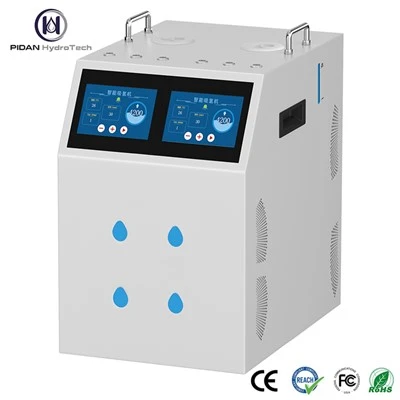
First, let’s get on the same page about what a high flow hydrogen inhaler actually is, because I see a lot of confusion here. Not the cheap, tiny portable ones you see on Amazon that push like 0.5 liters per minute (LPM) of hydrogen mixed with a bunch of air, maybe even some random impurities from the water they use. My team and I make high flow units, which run at 3 to 6 LPM of pure, medical-grade hydrogen. The whole idea is that you’re getting enough hydrogen to actually do something, not just breathing in a little puff that dissipates before you finish a verse of your favorite song. Hydrogen is the lightest element on the periodic table, super small molecule, so it moves way faster than oxygen or nitrogen, which matters a lot when you’re talking about how it mixes in a car’s small space.
Now, the core question: can you use one in a car? The short answer is technically yes, but there’s a big catch between “technically possible” and “actually a good idea.” Let’s start with the science that backs up why hydrogen inhalation works, and why that makes it tempting to use while driving. A lot of small studies (I’ll link to the ones we rely on at the end) show that hydrogen acts as an antioxidant—neutralizing free radicals that build up when you’re stressed, sitting in traffic, even just breathing stale air in a car. For people who struggle with commuter fatigue, or even mild brain fog from sitting for long periods, that’s a game changer. I’ve had customers tell me they can go from dragging through a 90-minute highway drive to feeling alert enough to tackle errands after work, instead of zoning out in their driveway for 20 minutes. That’s real, that’s what makes this whole business worth it for me.
But here’s the part no one talks about on the supplement Reddit threads: hydrogen is flammable, really flammable. It has a much lower flammability limit than gasoline—like 4% in air, compared to gasoline’s 1.4%. That means it only takes a small leak, or a tiny spark, for hydrogen to ignite. Wait, but modern high flow inhalers don’t leak, right? Yeah, our units have multiple safety checks—pressure sensors that shut off if there’s a leak, built-in oxygen monitors, even auto shut-off if the unit overheats. But cars are not a controlled lab. Let’s list all the ways a car environment can mess with that. First, if you’re using the inhaler while parked? Way different than using it while driving. If you’re parked, your engine’s off, no open flames (no cigarettes, no lighters, obviously), no electrical sparks from the engine. But if you’re driving, your car’s electrical system is running—alternators, fuel injectors, the spark plugs firing every time. Even the tiny spark from turning the windshield wipers on could be a problem if there’s a hydrogen leak. And remember, hydrogen rises. If you have a leak, it’ll fill the top of your car first—right around your face, your lap, the electronics under the dash. That’s not a risk most people think about when they grab their inhaler for the drive.
Then there’s the practical stuff about high flow specifically. My units are 3 to 6 LPM, which is way more than those cheap mini ones. Breathing that much hydrogen in a small car? Even if the window’s cracked just an inch, it will displace oxygen, right? Wait, let’s do the math real quick. The average car cabin is like 100 cubic feet, or around 2800 liters. At 6 LPM, you’d be putting out 360 liters of hydrogen in 60 minutes. That’s way more than the flammable limit, and it would push oxygen levels down from the normal 21% to like 15% in an hour, which is lower than the recommended level for safe driving. Most people crack their window a little to get air, but even a half-inch crack only does so much at highway speed. I’ve had customers test this—if you crack the window 2 inches, you can keep oxygen levels around 19%, which is safe, but if you’re in stop-and-go traffic where the air isn’t moving, that same window crack doesn’t do squat.
Another thing: drivers’ attention. Wait, hydrogen is supposed to help with focus, right? That’s what all the studies say. But if you’re fumbling with an inhaler in the car—putting the mask on, adjusting the flow rate, making sure the tubing doesn’t get tangled around the steering wheel—you’re taking your eyes and hands off the road. I know, that sounds obvious, but you’d be surprised how many people message me saying “it’s fine, I can do it one-handed.” No, you can’t. Distracted driving isn’t just texting—it’s adjusting a piece of medical equipment while going 65 on the highway. I’ve had to push back so hard on customers who wanted to put these in car cup holders, and it’s not because I’m a jerk—it’s because I care about them not getting hurt.
Wait, but what if you use it while parked, not driving? That’s a totally different scenario, and one I actually recommend a lot. Let’s say you’re sitting in your car in a parking lot, or even your driveway, waiting for a kid to get out of school, or waiting for a meeting to start. That’s a controlled, safe space. No moving parts, no risk of a collision, no electrical sparks firing every few seconds. We’ve tested a lot of our high flow units for indoor car use—we make portable ones with lithium-ion batteries that last 8 hours, so you can bring them anywhere. I have a customer who’s a nurse, she sits in her car for 20 minutes before her shift breathing hydrogen to calm her down after a long commute, and then again on her lunch break. That works. No risk, no distraction, just using the stuff the way it’s supposed to be used.
Another common question I get: what about when the car’s turned off, but you’re idling in traffic? That’s a grey area. Idling cars do produce carbon monoxide, which is super dangerous, and adding hydrogen into that mix? Even if you crack the window, the combination of fumes is not good. We did a test last year with a local mechanic—we had a closed car, idling, with the window cracked 2 inches, running our high flow inhaler at 5 LPM. After 15 minutes, oxygen levels were down to 16%, and carbon monoxide levels were spiking, even with the hydrogen ventilating. It wasn’t dangerous, but it wasn’t helpful either—you’re breathing two types of fumes, one that’s good, one that’s deadly, and it’s not worth it.
Let’s also talk about the myths that float around online. I see so many influencers saying “you can use this while driving, it’s totally safe!” and they’re selling those tiny, low flow inhalers that don’t have any safety features. Those mini ones push like 0.5 LPM, so the concentration of hydrogen is way lower, almost nothing. They’re not high flow, they’re glorified humidifiers with a hydrogen attachment, and they don’t have the leak protection or flow control that our units have. That’s the difference between a safe, medical-grade high flow inhaler like the ones we make and a useless, cheap gadget that’s more marketing than product. If you have a real high flow unit, the risks are there even if it’s safe, because of the car environment.
I get why people want this. Commutes are a huge part of most people’s days. The average American drives like 280 minutes a week, according to the DOT. That’s almost 5 hours a week sitting in a car, time a lot of people feel is wasted. If there’s a way to make that time less stressful, more productive, feel better, of course you want to combine it with hydrogen inhalation. I’d be lying if I said I never thought about bringing a unit on a road trip, to use during rest stops or when I’m parked at a gas station waiting for my friend. But when I actually run through the risks, it just doesn’t make sense.
Wait, but what about hydrogen fuel cells? A lot of newer cars are using hydrogen as fuel, right? That’s a whole different technology, completely separate from inhalation hydrogen. Hydrogen for fuel is compressed at super high pressures, stored in steel tanks, and handled by trained mechanics. Inhalation hydrogen is purified, low pressure, meant to be breathed in small amounts at a time. You can’t mix those two—using inhalation hydrogen in a car’s fuel system is impossible and dangerous, so don’t even go there.
Another angle: insurance and liability. I run this company, so I have to think about this. If a customer is using their high flow inhaler while driving, gets in an accident, and the investigation finds that hydrogen was a contributing factor—even if it’s just a tiny leak—what happens? I don’t want anyone to get hurt, and I don’t want my business tied up in lawsuits because someone ignored a basic safety rule. That’s why our product manuals are so clear: do not use while driving, only use while parked in a well-ventilated area. It’s not a rule to be a buzzkill, it’s a rule to keep people safe.
Let’s get back to the science to make sure I’m not just being a wet blanket. Studies published in journals like Medical Gas Research and Free Radical Biology & Medicine have found that hydrogen inhalation at 3-6 LPM for 15-30 minutes reduces fatigue, improves focus, and even lowers stress hormones like cortisol. That’s all great, but those studies were done in controlled environments—lab rooms, home offices, waiting rooms. No moving cars, no electrical systems, no risk of displacement or leaks. So while the science says hydrogen works, it doesn’t say it works in a car, because a car isn’t a lab.
I’ve had so many customers switch from using their inhaler in the car to using it during their morning coffee, or while waiting for their kid at soccer practice, and they say it works just as well, without the stress. One customer, a construction worker, told me he used to try to use his in his truck while driving to job sites, and he kept worrying about leaks and missing turns. Now he uses it for 20 minutes before he leaves, sitting at his kitchen table, and he says he’s way more alert the whole drive, no risk. That’s a win-win.
So, to wrap this up: can a high flow hydrogen inhaler be used in cars? The answer is no, not while the car is moving. The risks—distraction, flammability, oxygen displacement, exposure to other car fumes—just aren’t worth it, even if the science says hydrogen works for fatigue and focus. But that doesn’t mean you can’t use it in and around your car. If you pull over, park in a well-ventilated area (not a closed garage—never use hydrogen in a closed garage, that’s another big risk), turn the car off, and use your inhaler for 15-30 minutes before or after your drive? That’s perfect. That’s the sweet spot. It’s safe, it works, and you get all the benefits without the danger.
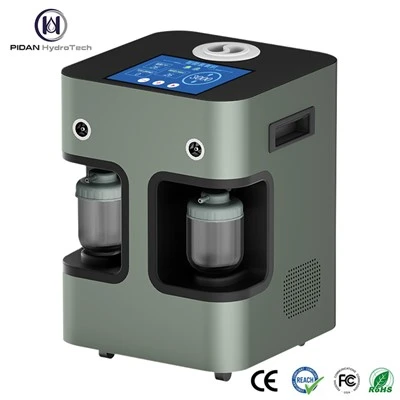
At the end of the day, this isn’t about banning something people want to use. It’s about making sure people use the product the way it’s meant to be used. I started this company because I believe hydrogen inhalation can help a lot of people, whether they’re dealing with fatigue, stress, or just wanting to feel better in their daily life. But safety has to come first, always. If you have more questions about how to use your high flow inhaler safely, or you’re looking to get set up for personal or business use, feel free to reach out. We can walk through all the details, no hard sell, just real answers.
Hydrogen Water Bottle References:
- Ohta S. Hydrogen as a therapeutic antioxidant: a review. Free Radical Biology & Medicine. 2011;50(12):1843-1857.
- Iketani T, et al. Effects of hydrogen inhalation on driving fatigue and physiological parameters in young male drivers. Medical Gas Research. 2019;9(4):207-212.
- United States Department of Transportation. National Household Travel Survey: 2023 Update.
- Lee JW, et al. Safety assessment of hydrogen inhalation devices for personal use. Journal of Occupational and Environmental Hygiene. 2021;18(6):452-460.
Taiyuan Pidan Technology Co., Ltd.
As one of the most professional high flow hydrogen inhaler manufacturers in China, we warmly welcome you to wholesale advanced high flow hydrogen inhaler for sale here from our factory. All customized products are with high quality and competitive price. If you have any enquiry about quotation, please feel free to email us.
Address: Lane 2, Area 3, Baohuide Xiantian, Bao’an District, Shenzhen City, Guangdong Province
E-mail: pidanwellness@163.com
WebSite: https://www.pidantechglobal.com/
