If you’re reading this, chances are you’re on the hunt for wood wool panels—whether it’s for a home studio, an office open space, a café, or even a retail store. And if you’ve spent 10 minutes scrolling through Google, you know there’s no shortage of options out there. As a supplier who’s been in this game for years, I’ve seen it all: people picking the wrong panels because they fixedate on price alone, or didn’t stop to think about what their project actually needs. Today, I’m breaking down how to cut through the noise and pick the right wood wool panels without overcomplicating things. Let’s keep this real—no fancy jargon, just stuff that’s actually helpful. Wood Wool Panels
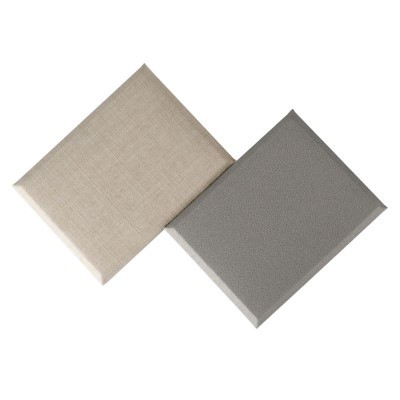
First off, let’s get one thing straight: wood wool panels aren’t just “acoustic foam with a wood twist.” They’re made from renewable wood fibers bound with a small amount of cement (no, that’s not concrete—this is lightweight, people) and have that rough, textured surface that does more than look cool. But here’s the key: what works for a dead-quiet home recording studio won’t work for a busy break room, and what’s perfect for a kid’s playroom is totally wrong for a high-end restaurant. So your first step isn’t even looking at panels—it’s answering one question: what’s this project for?
Let’s start with the big one: acoustic performance. That’s why most people reach for wood wool panels, right? But not all acoustic needs are the same. If your main goal is to cut down on echo in a small space—like a home studio where you don’t want your guitar riffs bouncing off walls and ruining recordings—you’ll need panels with a higher noise reduction coefficient (NRC). For context, NRC is a scale from 0 (totally reflects sound) to 1 (absorbs almost all sound). Most basic wood wool panels have an NRC around 0.7, but we make a thick, dense version (we call it Studio Grade—easy to remember) that hits 0.9. That means 90% of mid and high-frequency sound gets absorbed. Great for studios, home theaters, or libraries where quiet is key.
But wait—what if your project is a co-working space or a retail store where you don’t want it to feel like a cave? Too much absorption can make a room feel dead, and low-frequency sound (like the hum of a fridge or crowd chatter) might still bounce around. For those spots, a medium-density panel with an NRC around 0.6 is perfect. It softens echo without killing the vibe, so people can talk normally without shouting or feeling like they’re in a soundproof box. That’s the sweet spot for most commercial spaces, by the way. And if you’re dealing with a space that has a lot of low-frequency noise—like a gym or a restaurant with a loud kitchen—you’ll want to pair wood wool panels with a small amount of bass traps (we sell those too, fyi) but the right wood wool is still the base.
Next up: material quality, and no, this isn’t just about how “natural” it sounds. Let’s be honest, some cheap wood wool panels out there feel like they’re made from compressed garbage—loose fibers, weird off-gassing, even small amounts of non-renewable binders. Our panels are made from 100% sustainably harvested softwood (we source from FSC-certified forests, so you can feel good about that) and only a small amount of Portland cement as a binder. That means they’re zero-VOC, so no weird chemical smells that will make your office staff or café customers leave with a headache. Plus, they’re moisture-resistant—huge if your project is a bathroom, a basement, or a patio enclosure. I’ve had customers who bought cheap panels for a basement studio, and after a month of humid weather, they were moldy and falling apart. Ours? We’ve had panels installed in a damp warehouse for 5 years, no issues. That’s the difference between good and garbage.
Thickness matters more than you think, too. A lot of people grab the thinnest panel they can find because it’s cheaper, but that’s a mistake. If you’re hanging panels on a wall, thin panels (15mm) might work for soft echo reduction in a bedroom, but if you’re covering a ceiling in a home studio, you’ll want at least 50mm. Why? Sound waves need space to be absorbed. Thicker panels have more depth, so they catch lower frequencies better. That’s not just a theory—we tested this in our own lab (don’t worry, no fancy PhDs here, just a sound meter and a quiet room) and a 50mm panel absorbs way more low-end than a 25mm one. So rule of thumb: thicker = better for critical acoustic spaces, but don’t waste money on extra thickness if you don’t need it. For a café, 25mm is totally fine. For a recording studio, go 50mm. For a basement, maybe 30mm to balance moisture and performance.
Then there’s installation, which a lot of people sleep on. Even the best panel in the world will look and sound bad if you install it wrong. First, do you want to hang it on the wall/ceiling, or build it into a partition? Our panels are super versatile—they work with just about any adhesive, or you can use clips if you want to easily remove them later (great for renters, by the way). But here’s a tip: leave a tiny gap between the panel and the wall if you’re hanging it. That air gap actually boosts acoustic performance by 15-20%—it’s a little trick we share with every customer, and it’s free. Also, make sure you measure correctly! I’ve had customers order 10 panels, install them, and realize they’re 2 inches too big for the space. Double-check your measurements before you click “order” from any supplier. And if you’re not handy, we can connect you with trusted installers in your area—no pushy sales stuff, just people who know how to hang wood wool right.
Design is another factor, even if you’re not a decorator. Wood wool panels come in different finishes: some are rough and natural, some can be sanded smooth, and some even come in light gray or white (we do a matte white option that’s perfect for modern offices). If you’re going for a rustic, cozy vibe—like a mountain cabin or a farm-to-table restaurant—go for the natural, rough finish. It adds texture without being too flashy. If you’re in a minimalist office or a boutique hotel, the smooth white or light gray works better. Also, the size: we have 2ft x 2ft squares, 4ft x 2ft rectangles, and even custom sizes if you need something weird (like a curved panel for a rounded ceiling). Don’t forget to think about how they’ll blend with your existing decor—you don’t want panels that stick out like a sore thumb, but you also don’t want them to look boring. Our natural finish panels actually get better with age—they develop a tiny silver patina over a few years, which adds character. That’s a big plus for long-term projects.
Wait, let’s talk about cost for a second, because I know that’s a big one for most people. Cheap panels might seem like a steal, but let’s do the math. A $20 panel from a no-name supplier might fall apart in 2 years, off-gas, and have bad acoustic performance. A $35 panel from us? It lasts 10+ years, is non-toxic, and works way better. That’s not a rip-off—that’s an investment. Also, don’t forget about hidden costs: if you buy a panel that’s too thin, you might need to add more panels to fix the sound, which ends up costing more. Or if it’s not moisture-resistant, you have to replace it way sooner. I’ve had a customer last year who bought 50 cheap panels for a café—they were moldy within 6 months, and he had to throw them all out and buy ours. Total cost? He spent less the second time, and it’s been 3 years with zero issues. So don’t let price be the first thing you look at. Look at value.
Let’s wrap this up with a quick checklist you can keep in your pocket when you’re shopping: 1) Know your space: is it a critical acoustic spot (studio, library) or just a regular space (café, office)? 2) Check material: make sure it’s sustainably sourced, zero-VOC, and moisture-resistant if needed. 3) Pick the right thickness: 25mm for casual spaces, 50mm for studios/basements. 4) Think about design: rough natural for cozy vibes, smooth for minimalist, custom sizes if needed. 5) Don’t skip installation: leave an air gap, measure twice, and ask for help if you need it.
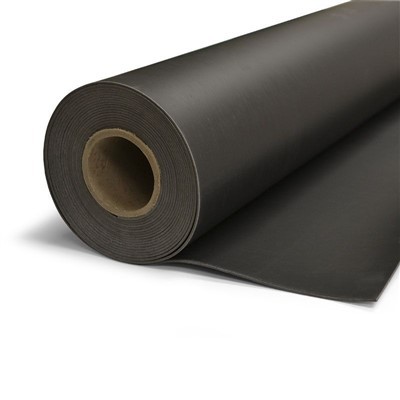
At the end of the day, choosing the right wood wool panel isn’t about picking the “best” one on the market—it’s about picking the one that fits your project. If you’re still not sure, just reach out. We don’t do hard sell, we just give you the straight scoop. Tell us about your space, what you’re using it for, and your budget, and we’ll point you to exactly what you need. No confusing catalogs, no hidden fees, just real advice from people who’ve been doing this for years. Go check out our panel options, and if you have questions, hit us up to discuss your project.
Sound-absorbing Materials References:
- Acoustic Design: A Practical Guide for Architects, Noise Consultants, and Acousticians, 2nd Edition, Routledge, 2021.
- Wood Wool Cement Panels: Properties, Applications, and Sustainability, Journal of Building Physics, Vol. 45, No. 3, 2022.
- Indoor Air Quality Standards for Commercial Buildings, Environmental Protection Agency, 2020.
Guangzhou MQ Acoustic Materials Co., Ltd.
Guangzhou MQ Acoustic Materials Co., Ltd. is one of the most professional wood wool panels manufacturers and suppliers in China, featured by quality products and low price. Welcome to buy CE approved wood wool panels in stock here and get quotation from our factory. We also accept customized orders.
Address: Room D403, KeZhu Business Building, ZhuJi Road, TianHe District, GuangZhou, China
E-mail: Lizzy@mq-acoustics.com
WebSite: https://www.acoustic-projects.com/
