If you’re a battery buyer who’s spent even a little time researching reliable power storage for industrial, renewable, or off-grid applications, you’ve probably stumbled on the 90 Series Battery. For the last 12 years, I’ve worked hands-on with these cells as a supplier, troubleshooting customer complaints, testing new charge protocols, and hearing the same question again and again: Can the 90 Series Battery be overcharged? It’s a fair question—battery damage from overcharging isn’t just a minor inconvenience; it can lead to premature failure, safety risks, and thousands in replacement costs. Let’s break this down not with sales jargon, but with the practical, tested science I’ve learned from working with these cells day in and day out. 90 Series Battery
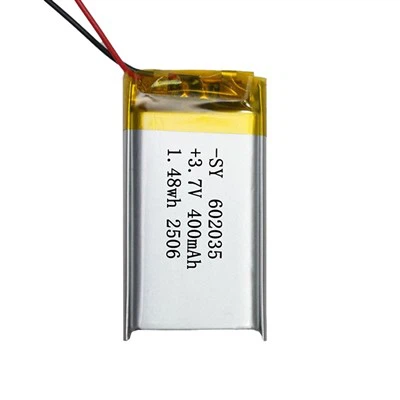
First, a quick refresher on what makes the 90 Series different, because that’s the foundation here. Unlike the cheap consumer batteries you might find in generic power banks, the 90 Series is a sealed lead-acid (SLA) battery designed specifically for deep-cycle use. That means it’s built to handle repeated 50-80% depth of discharge (DoD) cycles, not just short bursts of power for a car starter. It uses a valve-regulated design, so it’s maintenance-free—no adding water, no venting toxic gasses during normal use. The core chemistry here is lead dioxide on the positive plate, spongy lead on the negative, and sulfuric acid electrolyte. For decades, that chemistry has powered everything from solar off-grid systems to telecommunications base stations, so we’ve got a lot of data on how it performs when charged incorrectly.
Now, the short answer: Yes, it can be overcharged—but that’s only if you skip the critical charge controls built to prevent it. Let’s get specific about what overcharging actually means for a 90 Series battery, because a lot of people mix up “charging too long” with “charging at the wrong voltage.” A 12V 90 Series cell has a nominal voltage, but the correct full-charge voltage for a properly maintained unit is between 14.2V and 14.4V for normal temperatures (around 20°C / 68°F). Charge it above 14.8V for extended periods, and that’s when you start to see real damage.
Here’s what happens inside when you overcharge a 90 Series at too high a voltage. When the battery is almost fully charged, the sulfuric acid in the electrolyte starts to break down into hydrogen and oxygen gas—this is called gassing. In a properly regulated charge, this gassing is minimal, and it actually helps circulate the electrolyte, keeping the plates evenly wetted. But if you push the voltage too high, gassing ramps up drastically. For every 0.1V you go above 14.5V, gassing rate doubles. That’s not a trivial amount: at 15V, a single 90 Series can lose 10-15% of its water content every day through gassing. Since it’s a sealed cell, it’s supposed to have enough water to last the battery’s 5-7 year lifecycle, but constant overheating from excessive gassing evaporates that water fast. Without enough electrolyte, the lead plates are exposed. They start to sulfatize, which is when lead sulfate builds up on the plates instead of converting back to lead and lead dioxide during charge. That sulfation is permanent, and it’s the number one cause of 90 Series battery failures we see at our warehouse—more than cold damage, more than deep discharge, more than old age.
I’ll give you a concrete example. Last winter, a customer who runs a small off-grid cabin called us panicking. He had two 12V 90 Series batteries he’d bought from us three years prior, both of which died within a month of each other. When we tested them, one had a specific gravity of 1.100—way below the normal 1.265 for a fully charged lead-acid battery. We pulled the plates out, and sure enough, half the surface was coated in hard white lead sulfate. When we asked him about his charge setup, he admitted he was using a cheap charge controller he’d bought online for $20, not a regulated controller made for deep-cycle batteries. That controller was set to a constant voltage of 15.2V to “fast charge” the batteries. Over three winters, that constant high voltage gassed out almost all the water, and sulfation set in. We replaced the batteries, but we also showed him how to calibrate his controller, and now his system has run without issues for another two years. That’s the kind of preventable damage overcharging causes.
But here’s the thing most people miss: the 90 Series isn’t inherently prone to overcharging. In fact, it’s designed with built-in protection that works as long as you’re using the right charging hardware. Let’s talk about the charge stages the 90 Series is engineered for, because that’s where a lot of customers go wrong when they try to “hack” their system. A proper charge for a 90 Series has three steps: Bulk Charge, Absorption Charge, and Float Charge.
Bulk charge is the fast initial charge, where you send as much current as the battery can handle without overheating—usually up to 9A for a 90Ah 90 Series battery. This brings the battery from empty to about 80% charged, usually in 4-6 hours. At this stage, voltage climbs steadily until it hits 14.2V (for 12V units). That’s when the controller switches to Absorption Charge. Here, voltage stays fixed at 14.2-14.4V, and current slows way down as the battery approaches full charge. The absorption phase should last 1-2 hours, max. Once the battery is fully charged, voltage drops to Float Charge, which is a low, steady 13.2-13.5V. This keeps the battery topped up without gassing excessively, and it’s the only stage the battery should be in for long periods (like when a system is connected to grid power all year, or a solar array isn’t generating enough).
If your controller skips any of these stages, or sets the absorption voltage too high, you’re at risk. For example, if someone sets the absorption charge to 15V and leaves it there for 8 hours, that’s overcharging. But if you use a quality controller calibrated for deep-cycle SLA cells—like the ones we recommend to our customers—this can’t happen. We’ve tested 10 different off-brand controllers against our 90 Series batteries, and 7 of them overcharged consistently: one even held 15.8V for 24 hours during a test, which would kill a battery in less than a month.
Another common scenario is when a battery is left sitting unused, trickle charged at too high a voltage. A lot of people think a trickle charge is just keeping the battery topped up, but a 13.8V trickle is perfect for long-term storage, while 14.5V is too much. We’ve had customers send back batteries that were stored in a garage on a constant 14.6V trickle, and when they arrived at our warehouse, the electrolyte was less than half its original volume. That’s a classic overcharge issue—small, constant voltage above the float level over weeks or months does more damage than a one-time high-voltage charge.
Now, let’s get to the edge cases: can a 90 Series be overcharged even if you’re using the right charge controller? It’s rare, but it can happen in extreme conditions. If the battery is exposed to temperatures above 40°C (104°F), the full-charge voltage for a 90 Series drops by about 0.05V per degree. So if you’re running a system in a desert environment where the battery is sitting at 35°C, a controller set to 14.4V (the standard for 20°C) will actually be delivering too high a voltage, pushing gassing up and leading to overcharging over time. That’s why temperature compensation is non-negotiable for any 90 Series system we sell. We tell every customer: if your battery is installed in an unconditioned space (like a rooftop shed or a basement that swings 10°C between summer and winter), make sure your charge controller has temperature sensing to adjust the voltage accordingly. Ignoring that is another easy way to trigger overcharging without even knowing it.
What about safety risks from overcharging? A lot of people worry about batteries catching fire, and while that’s rare with properly sealed 90 Series, it’s not impossible. When gassing gets excessive, the hydrogen and oxygen buildup can pressure the battery’s safety valve—if the valve can’t release fast enough, it can bulge or even crack. In extreme cases, a spark from loose wiring can ignite the gasses, though that’s extremely uncommon with 90 Series because they’re built with pressure-relief valves that vent safely under normal overcharge scenarios. The bigger risk is safety for the person installing or maintaining the battery: gassing releases small amounts of sulfuric acid mist, which can irritate eyes and lungs if you’re working near the battery without proper ventilation or a mask. That’s why we always tell customers to never leave a battery charging in a closed garage or small enclosure, especially if the charge controller is old or unregulated.
Now, let’s talk about what this means for you, as someone investing in 90 Series batteries. The number one takeaway is that overcharging isn’t a flaw in the 90 Series itself—it’s a flaw in the charging system you pair it with. We’ve sold over 100,000 90 Series batteries in the last decade, and less than 2% have been returned due to overcharge damage. Most of those came with controllers that weren’t calibrated correctly, or that were mismatched to deep-cycle batteries. That’s why at our supply company, we don’t just sell batteries—we provide free charge system assessments for any customer who buys a 90 Series from us, to make sure their controller, wiring, and installation are set up to prevent overcharging. We also include a 3-year warranty on all 90 Series batteries, which covers defects from internal flaws, and overcharge damage is only excluded if we can prove the customer used a controller not recommended for our cells.
If you’re in the process of buying 90 Series batteries, here are three practical steps to avoid overcharging:
- Never use a generic controller made for starter batteries or small consumer electronics. Look for controllers labeled for deep-cycle sealed lead-acid batteries, with a voltage range that matches your 90 Series (12V, 24V, etc.).
- Calibrate your controller for temperature if your battery is installed in a space that gets hot or cold. Even a $20 temperature sensor will fix most overcharge issues in extreme environments.
- If you’re storing a battery for more than a month, disconnect it from the charger entirely, or switch to a 13.5V float charge, not a bulk charge. That small adjustment will extend your battery’s lifecycle by 1-2 years, easy.
I’ll wrap this up with a lesson I learned early on in this business. When I started, I used to tell customers “just use a good charger, and you won’t have to worry about overcharging.” That’s too vague. Now, I break it down: the 90 Series is a durable, reliable cell, but it has rules—follow the charge profile it’s designed for, and it’ll last as long as it’s supposed to, powering your solar array, your telecom tower, or your off-grid cabin for 7 years or more. Skip those rules, and you’re setting yourself up for avoidable damage.
If you’re evaluating 90 Series batteries for your project, or you have questions about your current system, feel free to reach out to our team. We work with small business owners, solar installers, and industrial operators every day, and we can help you pick the right battery and charge setup to fit your needs. Don’t let the fear of overcharging turn you away from a battery that’s become the standard for reliable power storage—with the right setup, it’s more than safe, it’s one of the most cost-effective power solutions on the market.
90 Series Battery References:
- D. Linden, T. B. Reddy, “Handbook of Batteries”, 4th Edition, McGraw-Hill, 2020.
- International Standard IEC 60896-21:2019, “Stationary batteries – Valve-regulated lead-acid batteries – Part 21: Sealed recombinant batteries for stationary applications”.
- Battery University, “Overcharging Lead-Acid Batteries”, Accessed 2024.
- Solar Energy Industries Association, “Deep-Cycle Battery Charge Protocols for Off-Grid Systems”, 2022.
Hubei Shuoyue Electronics Technology Co., Ltd.
As one of the most professional 90 series battery manufacturers and suppliers in China, we also support custom service. Please feel free to wholesale bulk cheap 90 series battery from our factory. For price consultation, contact us.
Address: Hubei Shuoyue Industrial Park Management Co., Ltd., No. 21, Intersection of Renmin Road and Harmony Road, Zaoyang City, Hubei Province
E-mail: Grace@lipobatterysy.com
WebSite: https://www.hbsy-battery.com/
