Let’s cut to the chase – if you’ve ever dabbled in industrial manufacturing, you’ve probably heard the myth: custom turned parts are always way more expensive than standard off-the-shelf ones. As a custom turned parts supplier who’s been in the game for nearly a decade, I’m here to break that down, no stuffy jargon, no smoke and mirrors, just real talk about what makes custom parts cost what they do, and when they might actually be cheaper than you think. Custom Turned Parts
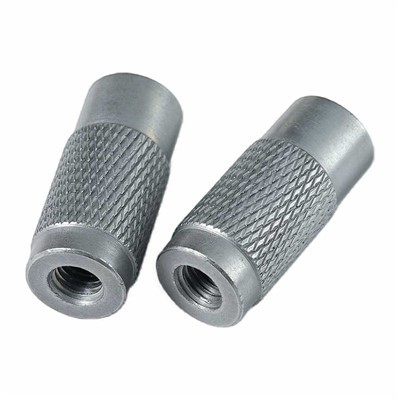
First, let’s get on the same page about what “custom turned parts” even means, because way too many folks lump every non-standard part into the same bucket. Turning is that machining process where we spin a workpiece on a lathe and cut, drill, or shape it to exact specs – think aerospace fittings, medical device components, or custom automotive brackets that don’t exist in a catalog. Standard parts? Those are the nuts, bolts, shafts, and bushings you can buy from any industrial supply house tomorrow, all made in massive runs to fit generic needs.
Right off the bat, the first big factor that makes custom parts seem pricier: volume. Standard parts are made in runs of thousands, sometimes millions, so the cost per unit gets crushed by economies of scale. When a machine shop runs a 10,000-unit order for a standard ½-inch steel shaft, they don’t have to set up the lathe, program custom tools, or adjust for unique dimensions every time – they just pull the same program they’ve used a hundred times before. For a custom part, though, that initial setup cost (let’s call it “NRE” for non-recurring engineering, even if I still forget what the acronym stands for half the time) is the big ticket. That programming, custom tooling, and first test run? That’s a one-time fee that gets spread across how many units you order. If you only need 50 custom fittings, that NRE will make the per-unit cost higher than a standard part you can grab in 5 minutes.
But wait – that’s only if you order tiny volumes. Here’s the part most buying teams miss: when your volume hits a certain threshold, custom parts often become way cheaper, or at least just as cheap, as standard ones. Let’s do a quick real-world example I ran last year for a medical device client. They needed a component that was almost a standard shaft, but with a tiny notch to fit their proprietary sensor. A standard shaft would’ve cost $0.75 each for a 100k-unit order, but wait – that standard part has a 16-week lead time because every supply house is backordered on it. The custom version? We reduced the setup cost because we could tweak an existing lathe program instead of building one from scratch, and for 100k units, the per-unit cost ended up being $0.68. Add in the fact we shipped it in 4 weeks, no extra fees, and that custom part was actually the better deal for them. Why? They didn’t have to pay rush fees for the standard part, they avoided inventory holding costs for storing 100k generic shafts (since they only needed this specific one), and they didn’t have to rework their entire assembly line to fit a standard part that almost worked.
Another myth I hear all the time: custom parts mean “make it however you want, no rules.” That’s a surefire way to blow your budget. I’ve had clients come to us with a part that needs a weird material, a super tight tolerance (like ±0.0005 inches, which is narrower than a human hair), and a one-week lead time – all for 20 units. Of course that’s gonna cost more than grabbing a standard bracket. But here’s a pro tip: a good custom turned parts supplier (that’s us, by the way) will help you optimize your design to keep costs down without sacrificing functionality. We once worked with a small automotive shop that wanted a custom wheel spacer made from a rare titanium alloy, but we pointed out that a high-grade aluminum alloy would hold up just as well for their application, cutting their material cost by 40% without any performance issues. Another client thought they needed a 0.001-inch tolerance, but we ran tests and showed them 0.003-inch was more than enough for their assembly, which let us skip a second inspection step and cut per-unit costs by 25%.
Then there’s the hidden cost of standard parts that nobody talks about. Let’s say you buy a standard bolt for your machine, it’s cheap upfront, but it doesn’t quite fit your assembly. So you have to spend 2 hours of a technician’s time modifying it, or you have to stop the production line for a day to source the right one. That’s downtime – which for a manufacturing shop, can cost thousands of dollars an hour. I had a client last year who ordered 5,000 standard hydraulic fittings for their packaging line, and 12% of them were slightly off-spec, so they had to throw 600 away and pay $500 in shipping to reorder. The custom fittings we made for them? Zero defects, no waste, and they avoided all that hassle. When you add in those hidden costs – downtime, rework, scrap, rush fees, inventory storage – custom parts often end up being the more cost-effective choice, even if the upfront per-unit price is higher.
Wait, but let’s not act like custom parts are always cheaper. If you only need a small number of parts, and you can wait for standard ones, go that route. I’d never recommend a custom part for a 10-unit prototype if a standard part would work. The key is knowing when to choose custom, and when to stick with what’s off the shelf. For example: if you’re designing a new product and you need parts that fit exactly to your design so you don’t have to make changes later, custom parts are worth the investment. If you’re replacing a worn part in an existing machine, and there’s a standard part that fits, that’s the way to go – it’ll be cheaper and faster.
I also get asked a lot about lead times, which tie into cost. Standard parts have lead times of a few days, sometimes a couple weeks, but if they’re backordered, that lead time can stretch to months. Custom turned parts? Most shops can get you a prototype in 1-2 weeks, and a full production run in 4-6 weeks, which is way faster than waiting for a standard part that’s out of stock. For a small business launching a new product, that speed to market can be worth way more than a few extra dollars per unit.
Now, let’s clear up another confusion: not all custom turned parts are one-off weird shapes. Some are just modifications of standard parts, like that notch I mentioned earlier, or a slightly longer length, or a different thread. Those are easier and cheaper to make than a totally unique part, so their cost is way closer to standard parts. A lot of suppliers won’t tell you that, but we prioritize making modified standard parts because they’re a win-win: the client gets a part that fits their exact needs, and we don’t have to start from scratch with tooling and programming.
So, going back to the original question: are custom turned parts more expensive than standard parts? The short answer is – it depends. But most of the time, when people think custom parts are too pricey, they’re only looking at the upfront per-unit cost, not the full picture. They’re ignoring NRE costs when volumes are low, hidden costs of rework and downtime, and the fact that custom parts are made to fit your exact needs, so you don’t have to compromise on design or performance.
If you’re sitting there right now, going “wait, this is exactly what I need for my next project, but I’m scared of the cost,” don’t guess. Hit us up, send over your specs – even if they’re just a sketch, or a part number that almost works, or a problem you’re trying to solve – and we’ll give you a clear, no-obligation quote. We’ll even help you tweak your design to keep costs down, no sales pitch, just real advice. We’ve worked with startups, big manufacturers, medical device teams, automotive shops, and more, so we’ve seen every trick to make custom parts fit your budget.
At the end of the day, it’s not about custom vs. standard – it’s about what’s best for your project. Standard parts are great for simple, generic needs. Custom turned parts are great when you need something that fits exactly, avoids hidden costs, and gets your product to market faster. Don’t let the myth of “custom = expensive” stop you from making the best choice for your business.
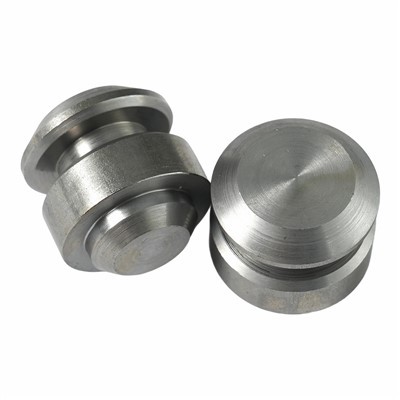
If you’re ready to talk through your needs, just reach out. We’re here to help you figure out if custom parts are the right move, and how to make them work for your budget.
CNC Turning References:
- Manufacturing Engineering and Technology, Kalpakjian, S. and Schmid, S.R.
- Journal of Manufacturing Systems, Volume 55, 2020, pp. 187-195
- Custom Parts Cost-Benefit Analysis for Small to Medium Manufacturers, National Institute of Standards and Technology (NIST), 2022
Huizhou Quanyi Precision Hardware Products Co., Ltd.
Address: Building A10, 7th Floor, Zhongchuangyingke 5G Industrial Park, Zhonghan Industrial Park, Tonghu Town, Huizhou City
E-mail: info@qycncturning.com
WebSite: https://www.qycncturning.com/
