If you’ve ever worked with materials that fall apart, warp, or give off weird fumes when heated, you know thermal stability isn’t just a science buzzword—it’s the difference between a plastic component that lasts 5 years in a car engine and one that cracks after 6 months, or a battery electrode that works safely vs. one that risks overheating. As a thermal analysis instruments supplier who’s talked to thousands of engineers, lab techs, and product managers over the years, I can tell you this: evaluating thermal stability doesn’t have to mean guessing or waiting for a material to fail in the field. The right tools turn that messy, expensive guesswork into clear, actionable data. Let’s break down how it actually works, no jargon overload, just what you need to know to get reliable results. Thermal Analysis Instruments
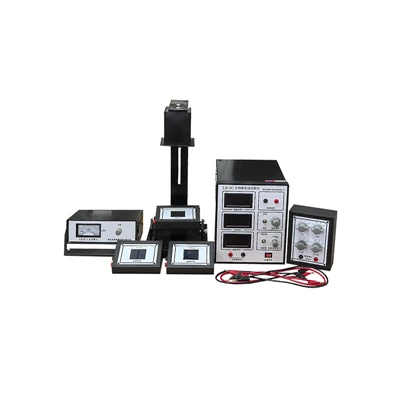
First, let’s get one thing straight: “thermal stability” isn’t a single number. It’s a set of behaviors. A polymer might be great at resisting heat until 250°C, but if it starts releasing volatile compounds at 210°C, that’s a problem for medical devices where outgassing can contaminate surfaces. A ceramic might not melt until 1,700°C, but if it loses 10% of its mass at 800°C in air, that means it’s corroding fast in high-heat industrial furnaces. So you can’t measure it with one test—you need the right combination of tools, each designed to pick up a different piece of the puzzle.
Let’s start with the workhorse of thermal analysis: thermogravimetric analysis, or TGA for short. This is the tool we’re most asked about, and for good reason. A TGA does one simple, super useful thing: it heats your sample at a controlled rate (say 10°C per minute, up to 1,000°C) while constantly weighing it. That means you can literally see when a material starts breaking down. For example, if you test a nylon 6,6 sample, the TGA will show a flat line of weight until around 400°C, then it’ll drop steadily as the nylon decomposes into small gas molecules. That 400°C mark is your onset temperature for thermal decomposition, a key number for anyone using nylon in high-temperature parts. But TGA does more than just pick when things decompose. Run it in different atmospheres—nitrogen for inert conditions (like what a plastic would see inside a car’s interior) or air for oxidative conditions (for something used in open air)—and you can see how stability changes based on environment. I once worked with a aerospace engineer who tested a new heat-resistant polymer for turbine components; running the TGA in air showed it decomposed 50°C earlier than in nitrogen, which told him he needed a small additive to prevent oxidation, a fix he never would’ve caught without that test. The biggest tip here: don’t just look at the final mass loss. Those little “steps” in the TGA curve? Each one is a different decomposition event. If your material has 2% mass loss at 150°C, that’s probably moisture or residual solvent, not the polymer itself. Ignore that at your peril—if you skip drying a sample before testing, you’ll get a false low onset temperature and design a part that fails early.
Next up: differential scanning calorimetry, or DSC, another core tool. Whereas TGA tracks mass, DSC tracks heat flow. It measures how much heat you need to add (or take away) to keep your sample at the same temperature as a reference material that doesn’t change when heated. That lets you spot things like melting, glass transition, and curing reactions—all critical for thermal stability. Let’s use the same nylon example: TGA tells you when it decomposes, but DSC tells you when it softens to the point it can’t hold shape. The glass transition temperature (Tg) of nylon 6,6 is around 50°C. That means below 50°C it’s rigid, above that it starts to soften, even before it melts at ~260°C. If you’re using that nylon to make a phone case that gets hot in a car, knowing the Tg is 50°C tells you it’ll start to feel bendy on a 60°C summer day—way before you see decomposition from TGA. DSC also tests oxidative stability, which is huge for things like rubber, plastic packaging, and engine parts. The oxidative induction time (OIT) test, which uses DSC, measures how long a material can resist oxidation at a set temperature. For example, a rubber seal might have an OIT of 20 minutes at 150°C, meaning it’ll take 20 minutes before oxidation starts breaking it down. If you’re designing a seal that has to last 10 years in a 120°C engine, you can extrapolate from that OIT number to see if the material is stable enough—no need to wait a decade to test. One mistake people make with DSC: not using the right reference. If your reference sample is even slightly different, or you skip calibrating the temperature with a standard (like indium, which melts at a known 156.6°C), your Tg or melting point numbers will be off by 10 or 20°C. That might not sound like much, but for materials where every degree counts, it’s the difference between a safe part and a failure.
Now, what if you need to look at how a material changes shape when heated, not just mass or heat? That’s where thermomechanical analysis (TMA) comes in. TMA applies a small force to a sample while heating it, and measures how much it stretches, shrinks, or deforms. Let’s take a composite material for wind turbine blades: you need it to stay rigid at 80°C, where the blade gets hot in the sun, but not so brittle that it cracks in cold weather. TMA can tell you the coefficient of thermal expansion (CTE)—how much it expands when heated—so you can match it to other materials in the blade to prevent warping or delamination. It can also show when a material starts to soften: if your TMA sample is a thin film of polyimide, you’ll see it hold its shape until 300°C, then start to stretch as it gets soft, which is way more useful for coating applications than TGA or DSC, which don’t track physical shape change. We worked with a medical device manufacturer last year that used TMA to test a polymer catheter material; they found the catheter would start to bend at body temperature (37°C), which is exactly where it needs to stay rigid to insert, but flexible once inside. That was a tiny but critical detail they missed until they ran TMA.
Wait, but what about when you need to see what gases are being released when a material breaks down? TGA, DSC, TMA all tell you what’s happening to the material itself, but not the byproducts. That’s where coupled techniques come in—mass spectrometry (MS) or Fourier-transform infrared spectroscopy (FTIR) paired with TGA, called TG-MS or TG-FTIR. If you’re testing a material for aerospace use, you need to know it won’t release toxic or flammable gases in a fire. TG-FTIR can take every gas that comes off during TGA and identify what it is—carbon monoxide, hydrogen cyanide, water, whatever. I once had a customer who tested a new flame-retardant plastic for train interiors; TG-FTIR showed it released high levels of formaldehyde when burned, which was a dealbreaker for EU safety regulations. Without that coupled technique, they would’ve approved the material and faced a huge recall. These tools aren’t just for big companies, either; we have compact TG-FTIR systems that fit on a lab bench for small manufacturers who don’t need a huge, high-cost instrument.
But here’s the thing: buying a thermal analysis instrument is only half the battle. Even the best TGA or DSC is useless if you don’t run the test right, or you misinterpret the data. Let me share a few common mistakes I see all the time. First, sample size. If you run a 1 mg sample instead of a 10 mg sample, your decomposition curve will be noisier, and you might miss small mass loss events that matter. A too-big sample? It might not heat evenly, leading to a false onset temperature. Second, heating rate. Fast heating rates (20°C per minute) give you quick results, but they can make decomposition happen at a higher temperature than it would in real life. For testing a material that will heat up slowly in a product (like a plastic bag in the sun), use a slow heating rate (5°C per minute) to get accurate, relevant data. Third, atmosphere. Testing a plastic in nitrogen is great for long-term stability, but if you’re testing it for use in a warehouse, it’s going to be exposed to oxygen, so you need to run it in air for a realistic result.
Another big one: aging your sample first. If you test a brand-new plastic that was just molded, you might get a different thermal stability result than if you test a sample that’s been sitting on a shelf for a year absorbing moisture. Most materials undergo “pre-aging” in real use, so mimicking that in the lab—like putting a sample in a humidity chamber for a week before testing—will give you data that actually matches how the material will perform in the field.
Now, who is this all for? Let’s be clear: thermal stability testing isn’t just for PhDs in materials science. We work with everyone from small injection molding shops testing a new batch of PLA for 3D printing to big aerospace companies testing next-generation ceramics. If you’re making a product that will be exposed to heat—car parts, electronics, medical devices, packaging, energy storage—you need to know how your material behaves when heated, not just what it’s made of. For example, 3D printing engineers: a lot of PLA is advertised as “heat-resistant up to 60°C,” but running a quick TGA and DSC test will tell you exactly when it softens or decomposes, so you don’t waste time printing a bracket that melts on a hot day. For battery makers, thermal stability is non-negotiable; a battery electrode that decomposes at 150°C is a fire hazard, so TG-MS can identify the gases released during thermal runaway, letting you design safer cells.
Here’s the thing about thermal analysis: it’s not a black box. The instruments we build let you get data without needing a PhD to operate them, with easy-to-use software that walks you through test setups, calibrations, and analysis. But if you’re new to this, you don’t have to figure it out alone. We work with labs to help them design tests for their specific materials, whether they’re testing food packaging for outgassing or industrial hoses for oxidation stability. We also offer training, support, and even custom test methods for materials that don’t fit standard protocols.
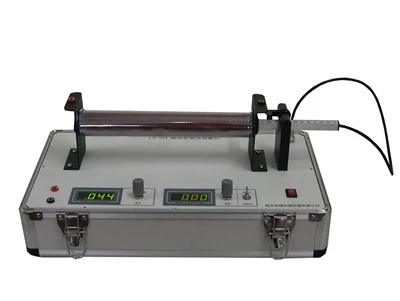
Let me wrap this up: evaluating material thermal stability is about combining the right tools for your use case, running tests correctly, and interpreting the data to fit your real-world needs. TGA for mass change, DSC for heat flow, TMA for physical shape, and coupled techniques for byproduct identification—each one fills a gap. No single test gives the full picture, but together, they eliminate the guesswork that leads to failed products, wasted materials, and even safety risks. If you’re tired of guessing how your material will hold up in heat, or you need to validate that a new material meets your stability requirements, let’s talk. We can help you pick the right instruments, design the right tests, and make sure you get reliable data that drives your product forward.
Thermal Analysis Instruments Reference:
- ASTM E1131, Standard Test Method for Compositional Analysis by Thermogravimetry
- S. Zhong, "Thermal Analysis of Polymers: Principles and Applications," Journal of Applied Polymer Science, 2018
- W.W. Wendlandt, "Thermal Methods of Analysis," 3rd Edition, John Wiley & Sons, 1986
- ASTM D3895, Standard Test Method for Oxidative Induction Time of Polyolefins by Differential Scanning Calorimetry
Nanjing Longbow Scientific&Educational Instrument Co., Ltd.
As one of the most professional thermal analysis instruments manufacturers and suppliers in China, we’re featured by quality products and good service. Please rest assured to buy customized thermal analysis instruments from our factory. If you have any enquiry about pricelist, please feel free to email us.
Address: Room D, 22th floor, No.305, North Jiangdong Road, Nanjing,Jiangsu Province, China
E-mail: 79425380@qq.com
WebSite: https://www.lb-physics.com/
