Hey there! I’m a supplier of military tents, and today I wanna talk about something super important – the ventilation rate of military tents. Military Tent

So, what exactly is the ventilation rate of a military tent? In simple terms, it’s the amount of fresh air that gets into the tent and the stale air that gets out within a certain period. It’s measured in cubic feet per minute (CFM) or cubic meters per hour (m³/h). Why does it matter so much? Well, think about it. When soldiers are inside a tent, they’re breathing, sweating, and maybe even cooking. All these activities produce moisture and carbon dioxide. If there’s no proper ventilation, the tent can become a hot, stuffy, and humid place. It can also lead to the growth of mold and mildew, which is not only bad for the tent’s lifespan but also for the soldiers’ health.
Let’s break down the factors that affect the ventilation rate of a military tent.
Tent Design
The design of the tent plays a huge role. Tents with multiple vents and adjustable flaps tend to have better ventilation. For example, some of our military tents come with large roof vents. These vents are strategically placed to take advantage of the natural airflow. When the wind blows over the tent, it creates a low – pressure area above the vent, which sucks the stale air out of the tent. And we’ve also got side vents. These can be opened or closed depending on the weather conditions and the number of people inside the tent. If it’s a hot day and there are a lot of soldiers in the tent, opening up the side vents can significantly increase the ventilation rate.
Size of the Tent
The size of the tent is another crucial factor. A larger tent obviously has more volume, which means it needs more fresh air to keep the environment inside comfortable. For instance, if you have a small two – person military tent, it might only need a ventilation rate of around 100 – 150 CFM to maintain a good air quality. But a big command tent that can house dozens of people could require a ventilation rate of 1000 CFM or more. We always calculate the appropriate ventilation rate based on the size of the tent we’re selling. It’s important to get this right, otherwise, the soldiers could be stuck in a less – than – ideal environment.
Number of Occupants
The more people inside the tent, the more oxygen they consume and the more carbon dioxide they produce. Each person exhales about 0.5 cubic feet of carbon dioxide per hour. So, if you have 20 soldiers in a tent, that’s 10 cubic feet of carbon dioxide being produced every hour. To keep the carbon dioxide levels within a safe range and ensure there’s enough fresh air, we need to adjust the ventilation rate accordingly. That’s why we often recommend higher ventilation rates for tents that are going to be used for longer periods or have a large number of occupants.
External Conditions
The weather and the outside environment also have an impact on the ventilation rate. On a hot and humid day, you’ll want a higher ventilation rate to keep the inside of the tent cool and dry. The hot air tends to rise, and by having good ventilation, we can let that hot, humid air escape and bring in cooler air from outside. In cold weather, though, you still need some ventilation to prevent condensation from building up on the inside of the tent. But you might not need as high a ventilation rate as in hot weather. And if there’s a strong wind outside, it can help increase the natural ventilation. We design our tents to make the most of these external conditions.
Now, let’s talk about how we ensure the right ventilation rate in our military tents.
We use high – quality materials for the vents. The mesh on our vents is fine enough to keep out insects and dust but still allows air to flow freely. And we test our tents in different conditions to make sure they meet the required ventilation standards. We’ve got a team of experts who study the airflow patterns and make adjustments to the tent design as needed.
For example, we recently developed a new type of tent for desert operations. The desert can get extremely hot during the day and cold at night. So, we designed the tent with adjustable vents that can be opened wide during the day to let in as much air as possible and closed partially at night to retain some heat. This way, we can maintain a good ventilation rate no matter what the external conditions are.
Another thing we do is provide guidelines to our customers on how to use the ventilation features of the tent. We tell them how to open and close the vents based on the number of people inside the tent, the weather, and the time of day. This helps them get the most out of the tent’s ventilation system.
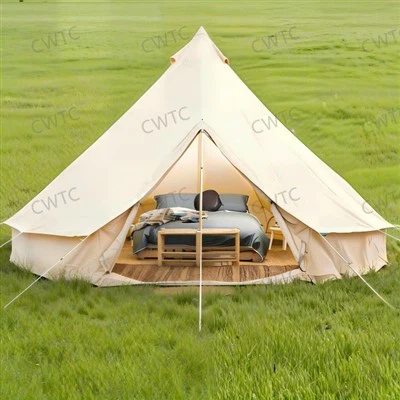
So, if you’re in the market for military tents, ventilation rate is something you really can’t ignore. A well – ventilated tent can make a huge difference in the comfort and health of the soldiers using it. And that’s where we come in. We’re a military tent supplier that takes ventilation seriously. We’ve spent years perfecting our tent designs to ensure the best possible ventilation rates.
Refugee Camp If you’re interested in our military tents, whether you’re a government agency, a military unit, or a contractor working on military projects, don’t hesitate to get in touch. We can provide you with detailed information about our tents, including their ventilation capabilities. We can also work with you to customize a tent based on your specific needs, including the required ventilation rate. Just reach out, and we’ll be more than happy to discuss the options with you.
References
- "Military Tent Design and Functionality" – A research paper on military tent design principles.
- "Ventilation in Enclosed Spaces" – A scientific study on the importance of ventilation in confined areas.
- "Field Manual on Military Shelter Systems" – A manual that provides guidelines for military tent use and maintenance.
CWTC(Tianjin) Technology Co., Ltd.
As one of the most professional military tent manufacturers and suppliers in China, we’re featured by quality products and good service. Please feel free to wholesale customized military tent made in China here from our factory. Contact us for quotation.
Address: Room 209, Building B, No. 5 Lanyuan Road, Huayuan Industrial Park, Binhai New District, Tianjin,China
E-mail: info@cwtctj.com
WebSite: https://www.cwtctj.com/
