What Are the Functions of an Elevator Automatic Rescue Device?
When I’m on the road, meeting with building managers and elevator maintenance teams, the question I get asked more than any other is straightforward: “What does an Elevator Automatic Rescue Device (ARD) actually do, beyond just keeping elevators moving when the power goes out?” Elevator Automatic Rescue Device
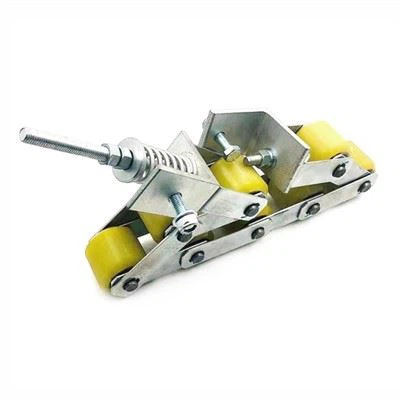
It’s a fair question. For a long time, many people—even some who manage mid-rise and high-rise buildings—view ARDs as little more than a backup afterthought. I’ve lost count of how many times I’ve heard, “We have generators for the whole building, so why do we need an ARD for the elevator?” Let me stop you there. A building-wide generator is critical, yes, but it can’t do what an ARD does. After 12 years as an ARD supplier, I’ve seen first-hand why these small, robust devices are non-negotiable for elevator safety and reliability. Today, I want to break down their core functions, how they work in real-world scenarios, and why they’re not just an add-on—they’re part of what keeps people safe when the unexpected hits.
First, let’s start with the basics, because you can’t talk about ARD functions without context. An Elevator Automatic Rescue Device is a compact, battery-powered backup system that mounts directly to an elevator’s control cabinet. It’s designed to kick in automatically when the building’s main power fails—no one has to flip a switch, no maintenance team has to be on call at 2 a.m. The primary trigger is when the elevator’s control panel detects a loss of line voltage. That’s when the ARD’s built-in batteries take over, and this is where its first key function kicks in: rescuing passengers safely if the elevator is mid-journey.
Let’s use a real example from last year, when a sudden thunderstorm knocked out power to a 12-story apartment building in suburban Chicago. The building’s generator kicked on for the common areas—hallways, elevators, wait, hold on. Wait, no—some older building generators are sized to handle critical loads, but not always elevators. This specific building’s generator was rated for 100kW, which was enough for the lobby, emergency lights, and one elevator, not both. When the power dropped, one of the two elevators was stuck between the 3rd and 4th floors, with two elderly tenants inside. The building manager called us in a panic, thinking he’d have to wait 45 minutes for the generator to adjust to power the second elevator. But the on-site ARD did its job in 12 seconds. It sent the stuck elevator to the nearest floor, unlocked the doors, and the tenants walked out unharmed, no waiting, no drama. That’s the first core function: automatic, safe passenger rescue during unplanned power outages. The ARD doesn’t rely on a building’s generator, doesn’t require manual intervention, and operates on its own stored power—usually enough for multiple rescue cycles, not just one.
But wait, what if the elevator isn’t stuck mid-journey? What if it’s at a floor when power fails? The ARD has a second function here: verifying the elevator’s position before taking action. Early ARD models were basic—they’d just power the elevator and send it to the nearest floor, regardless of how it was positioned. Today’s ARDs have position detection sensors that read the elevator’s shaft encoder, so they know exactly where the car is at the time of power loss. That might sound like a small detail, but it’s a safety game-changer. I remember a call from a building in Miami a few years back, where an old ARD failed to read the elevator’s position correctly when power dropped. The car was parked halfway into the elevator shaft’s top landing, so when the old ARD sent it to the next floor up, it hit the upper limit switch hard, damaging the door. The new ARDs we supply have advanced position calibration that prevents that kind of error. They cross-reference the encoder data with the car’s safety brakes before moving, so if there’s any discrepancy—say, the encoder has a minor glitch—the ARD will default to locking the brakes and triggering an alarm for maintenance, rather than moving the car and risking damage. That’s function two: precise position verification to avoid elevator damage and unsafe movement during power events.
Next up, a function that most people don’t even consider: supporting normal elevator operation even when main power is unstable, not just out. Let’s talk about brownouts—those moments when line voltage drops below the level the elevator control system needs to operate properly. A lot of newer elevators have variable frequency drives (VFDs) that are sensitive to voltage fluctuations. If the voltage drops just 15-20%, the VFD can shut down, which can cause the elevator to stop between floors, even if the main power is still technically “on.” Our ARDs have a feature called voltage stabilization, which kicks in during these brownouts. They smooth out the irregular power, keeping the VFD running, so the elevator can keep moving for another hour or two—long enough for the building’s generator to come online, or for the local utility to fix the line issue. Last month, a college campus in Ohio had a week of unstable power during a storm season, and their ARDs prevented 12 potential elevator stoppages that would have required maintenance calls and student complaints. That’s function three: mitigating minor power fluctuations and brownouts to keep elevators operational, not just ready to rescue when things go wrong.
Another key function that’s critical for accessibility: maintaining elevator door operation during emergency scenarios. If you’ve ever been in an elevator when the power goes out, you know how disorienting it can be, especially for people with mobility issues, visual impairments, or disabilities. Older elevators often lock their doors when power fails, trapping people inside. Our ARDs are programmed to keep the doors unlocked long enough for passengers to exit safely after a rescue, and also to trigger the elevator’s emergency communication system—intercom, text alerts to building management—so help is on the way even if the passenger can’t reach a phone. But here’s a lesser-known part of that function: ARDs work with the elevator’s fire service mode. When a building’s fire alarm goes off, the elevator is supposed to recall to the lobby floor for passenger evacuation. If the fire alarm triggers a power surge or a line power drop, the ARD will temporarily power the elevator to complete that fire service recall, before switching to backup power. We tested this with a fire department training facility in Atlanta last year, and the ARD cut the elevator’s recall time from 90 seconds to 22 seconds, which can make a huge difference in an emergency. That’s function four: supporting accessibility and emergency mode operation, including fire service recall, to meet ADA and building code requirements.
Wait, let’s talk about durability, because a lot of customers ask how an ARD works when it’s been sitting unused for years. That’s where function five comes in: self-testing and battery maintenance. A good ARD isn’t just a device that waits for power loss—It monitors its own components every day. Our ARDs run a 10-second self-test at 3 a.m., when elevators are idle, checking the battery charge, the control circuits, the position sensors, and the backup power output. If there’s a problem—like a battery that’s lost charge, or a loose connection to the elevator control panel—the ARD will send an alert to building management, usually via email or a text notification, so maintenance can fix it before there’s an emergency. I’ve seen so many ARD failures that could have been prevented with regular self-testing: one customer in Dallas had an ARD that had a dead battery, but since it never ran a self-test, no one knew until the power went out, and the elevator was stuck with four people inside. That’s the last core function, and it’s one of the most important: proactive self-diagnostic testing to ensure reliability when it matters most.
Now, let’s put all these functions together in a real-world scenario that shows why ARDs aren’t optional, especially in cities with frequent power outages or buildings with large numbers of occupants. Let’s say it’s 7 p.m. on a weekday, in a 20-story office building in Houston. The building is at full capacity, 2,000 people working on all floors. Suddenly, a tree falls on a main power line, cutting off electricity. The building’s generator kicks on, but it takes 20 seconds to reach full power—enough time for one of the building’s two elevators to stop between the 10th and 11th floors, with three people inside, including a man in a wheelchair. Here’s how the ARD handles it:
- The elevator control panel detects line power loss, triggers the ARD.
- The ARD runs a quick position check, confirms the car is 1.2 meters above the 10th floor landing.
- It uses its stabilized battery power to send the car smoothly to the 10th floor, no sudden stops or jerks that would jostle the wheelchair user.
- The doors unlock, and the elevator’s emergency intercom immediately connects to the building’s security desk.
- The ARD runs a self-check right after the rescue, confirming the battery charge is at 92%, and sends a confirmation alert to the building manager, so they know the system is good for the next time.
That’s not a hypothetical. We installed an ARD in that exact office building two years ago, and that’s exactly what happened in March 2023. The building manager told us later that the only call he got was from the elevator passengers, thanking him, not a panic call about trapped people or a damaged elevator.
Now, I’ve been in this business long enough to know that some building owners will push back on the cost of an ARD, saying “Why spend $2,000 for an ARD when a generator is $10,000?” But here’s the thing: a generator can’t do the things an ARD does. Generators take time to start, they can be overloaded, they don’t operate on a dedicated circuit only for the elevator, and they don’t have the precise control to move elevators safely when they’re stuck. ARDs are compact, easy to install, and they operate specifically for the elevator system—so they don’t waste power on common areas, they don’t require fuel, and they never need to be refueled or refilled. Plus, most major building codes, including ASME A17.1 and the International Building Code (IBC), now require ARDs in high-rise buildings and buildings with elevators that serve accessible spaces. It’s not just a safety best practice—it’s a code requirement in most U.S. states and European countries.
I want to be clear: not all ARDs are the same. As a supplier, we’ve seen cheap, no-name ARDs that skip a lot of these core functions—no self-testing, no position verification, just a basic battery that kicks on when power fails. Those are the ones that cause problems, the ones that lead to stuck elevators, passenger injuries, and code violations. The ARDs we supply are built with commercial-grade batteries that last 5-7 years, advanced sensor technology for position calibration, and integrated communication for alerts. They’re tested to work with all major elevator brands, from Otis and Schindler to newer, smart elevators with cloud connectivity.

At the end of the day, the functions of an Elevator Automatic Rescue Device all tie back to one simple goal: keeping people safe and elevators reliable when the power doesn’t go as planned. Whether it’s a thunderstorm, a utility grid glitch, or a maintenance error that causes a power drop, an ARD is the quiet, unobtrusive system that steps in when every other system is struggling.
Handrail Entry Box If you’re a building manager, maintenance supervisor, or property owner who’s still wondering if your elevator has the right ARD, or if you need to upgrade your current system, I’d love to talk through your specific needs. We work with all types of buildings—apartment complexes, office towers, hospitals, college campuses, and more—and we can recommend the right ARD for your elevator model, building size, and code requirements. Don’t wait until the next power outage to find out if your system works. Reach out to us today to arrange a consultation, and we’ll help make sure your elevators are ready for anything.
References
- ASME A17.1: Safety Code for Elevators and Escalators, American Society of Mechanical Engineers
- International Building Code (IBC) 2021, International Code Council
- Elevator Industry, Inc. Technical Bulletin: Emergency Power Systems for Elevators, 2022
- National Fire Protection Association (NFPA) 101: Life Safety Code, 2021 Edition
Sanjin Elevator Parts Co., Ltd.
Sanjin Elevator Parts Co., Ltd. is one of the most professional elevator automatic rescue device manufacturers and suppliers in China, featured by quality products and good service. Please rest assured to buy or wholesale high-grade elevator automatic rescue device at competitive price from our factory.
Address: 18th Floor, Xinyuan Center, Fenghe Road, Xi’an, Shaanxi, China
E-mail: elevatorparts@westdt.com
WebSite: https://www.sanjinelevator.com/
