If you’ve ever scrolled through fashion Instagram or popped into a trendy boutique lately, you’ve probably noticed hats getting a major glow-up. Think past plain baseball caps or basic beanies—there are now straw hats with frilly, textured accents, dad caps with dainty stitched trim, and even bucket hats with delicate, see-through details. As an embroidery lace supplier, I get tons of questions from designers, small brand owners, and even DIY folks: Can embroidery lace actually work on hats? No, it’s not just a random “trendy add-on”—it’s a game-changer, but only if you do it right. Let’s break this down, from the science of how lace holds up on hats to practical tips that’ll make your custom hat line stand out. Embroidery Lace

First, let’s clear up the basics: embroidery lace isn’t just that lacy tablecloth your grandma kept in her closet. It’s a textile made by stitching decorative patterns onto a base fabric (or sometimes a water-soluble stabilizer that dissolves, leaving only the lace itself) using specialized embroidery machines. The best part for hats? It comes in so many weights and styles—from super lightweight, gauzy lace for sun hats to sturdier, medium-weight lace for structured dad caps. But here’s the thing: hats move. They’re banged around in bags, get rubbed against seats in cars, and exposed to sun, sweat, and rain. Not all lace can handle that.
I’ve seen a lot of people make the mistake of grabbing any pretty lace from a craft store and gluing it to a hat, only for it to peel off after a few wears. That’s because craft store lace is usually made for clothes or decor, not for a head’s constant movement. For hats, you need two key things: a lace that’s got enough structural integrity to not stretch out of shape, and a way to attach it that can handle friction and moisture. Let’s dive into the science here. Hats undergo constant tension and flex—when you put a cap on, the fabric stretches slightly, and when you take it off, it snaps back. If the lace’s base fabric is too thin, those repeated stretches will make the lace unravel or sag. That’s why commercial hat manufacturers work with lace that has a stable foundation, like cotton poplin or a polyester blend, stitched with reinforced thread (think polyester core thread, which is way stronger than regular cotton thread). It’s the same reason backpacks use polyester— it’s resistant to abrasion, which is exactly what a hat needs when it’s rubbing against your hair, car seats, or jacket collars.
Now, let’s talk about common hat styles and how lace works for each, because not all hats are made the same. Let’s start with the big one right now: sun hats. Straw sun hats are everywhere, and adding a delicate lace trim along the brim or the crown is such a easy upgrade. Wait, but can embroidery lace even go on straw? Yes—if you use a lightweight, non-stiff lace (like a Chantilly lace, which is super fine and has a soft pattern) and attach it with a temporary, water-based adhesive first to hold it in place while you stitch it. Straw can be brittle, so you can’t just glue it on with strong, permanent glue—it’ll crack the straw. I recently worked with a small sun hat brand that ordered 500 yards of custom Chantilly lace to line the inner brim and add a ruffled layer along the crown. They told me their sales jumped 30% after they added the lace, because customers said it felt “feminine but not fussy” for beach trips and brunch. The key here for sun hats is choosing lace that’s lightweight enough to not weigh the hat down—no one wants a heavy sun hat that gives you a headache.
Then there’s dad caps, those structured, curved-bill caps that are super popular for casual wear. Can lace go on dad caps? Absolutely, but not as a full layer (that’d be too bulky). Most brands use lace as a decorative accent: stitching a small lace patch on the front of the cap, or adding a narrow lace trim along the top seam where the crown meets the bill. Wait, but how do you stitch lace onto a structured cap? It’s not like sewing a t-shirt—you need a cap hoop attachment for your embroidery machine. That’s another thing I tell designers when they reach out: if you’re planning to stitch lace directly onto hat fabric, you need the right tools. But wait, some brands prefer attaching lace as a separate appliqué, not stitching it into the hat itself. For that, you can use a medium-weight lace with a non-fraying edge (finished with a tight overlock stitch) and use a nylon thread to attach it, because nylon is stretchy enough to move with the cap without snapping. I had one client who made custom dad caps for a music festival, with tiny lace patches of daisies on each side—people were lining up at their booth just to buy the hats, not the merch.
What about beanies? Beanies are the coziest hat, and adding lace can be a tricky balance—too much and it feels like you’re wearing a tablecloth, too little and it’s just a plain beanie. The trick here is using lace as an overlay on part of the beanie, not the whole thing. For example, a slouchy beanie could have a lace panel on the front, or a thin lace trim along the edge that sits above your ears. But for beanies, you need lace that’s stretchy, because the beanie stretches when you pull it on. That’s where a stretch embroidery lace comes in—made with spandex blend thread, so it moves with the fabric instead of pulling away. I tested a stretch lace a few months ago, and when I stitched it onto a ribbed beanie, it stretched 20% without fraying, which is perfect for beanies that need to fit different head sizes. I’ve seen people skip this and use regular lace, which gets all stretched out and looks messy after a few wears—so that’s a pro tip right there.
Now, let’s address the biggest concern: durability. A lot of brand owners ask me, “Will the lace fall off after one wash?” The answer depends on two things: the lace quality and the attachment method. If you use a cheap craft store lace and glue it with fabric glue, yes—it’ll fall off. But if you work with industrial-grade embroidery lace (which is what we supply) and use a combination of stitching and a washable adhesive, it’ll hold up through multiple washes. We test all our lace for washability: we put it through 20 cycles of machine washing in cold water, and the stitching doesn’t fray, the pattern doesn’t fade, and the lace doesn’t shrink. That’s non-negotiable for hats, because no one wants to buy a hat with lace that turns into a raggedy mess after one trip to the laundry. We also make sure our lace is UV-resistant, which is key for sun hats that spend all day outside—no one wants a white lace that turns yellow after a month in the sun.
Wait, but can you use lace for the entire hat? Like, a lace hat instead of a fabric hat? That’s a thing too, especially for formal or dressy occasions, like wedding hats or bridal shower accessories. Lace hats are super elegant, and they’re made by stitching lace together in the shape of a hat, with a lining for comfort. For that, you need a lace that’s got a firm enough weave to hold the shape of the crown and brim, but still soft enough to wear on your head. We work with a lot of milliners who order our lace specifically for custom bridal hats—they like that our lace comes in ivory, blush, and white, and can be dyed to match a wedding dress. One milliner told me that her best-selling bridal hat is made with a 100% cotton lace, and she adds a small band of matching lace around the base to tie it all together. It’s way lighter than a felt hat, so the bride can wear it all day without her head hurting.
I’ve also seen some DIYers ask if they can use embroidery lace on thrifted hats, and the answer is yes, but with a few tips. If you’re adding lace to a thrifted felt hat, for example, use a hot glue gun with low temp so you don’t melt the felt, and test a small spot first. For a thrifted straw hat, use a fabric adhesive that’s designed for delicate fabrics, not super strong industrial glue, because it’ll damage the straw. But for commercial brands, it’s way better to work with a lace supplier who can give you custom sizes and patterns, because generic craft store lace is limited. For example, if a brand wants a lace that matches their logo, we can digitize a custom embroidery pattern to turn their logo into a small lace patch, and stitch it right onto the hat. That’s a big plus for small brands who want unique, custom products that stand out from the big box stores.
Let’s talk about trends too, because hats are all about what’s popular right now. We’re seeing a shift from plain, neutral hats to hats with subtle, feminine accents, and lace is perfect for that. It’s not over-the-top like sequins, and it’s way more durable than beadwork (which can fall off when you’re at a festival or walking on the beach). I just got an order from a brand that makes sustainable hats, and they wanted a recycled polyester lace, which we now offer. They told me their customers care about eco-friendly materials, so using recycled lace makes the hat feel more intentional. That’s another point: embroidery lace can be made from sustainable materials, which is a big selling point for brands targeting conscious customers. We have options for cotton lace, recycled polyester lace, and even bamboo lace, which is soft and biodegradable.
But here’s the thing I tell every new client: don’t overdo it. Lace on hats works best when it’s a subtle accent, not the whole hat (unless you’re going for a very specific bridal or boho look). I saw a brand last year that tried to make a full lace baseball cap, and it was way too stiff and heavy—no one bought it. The sweet spot is usually 10-15% of the hat’s surface area is lace: a small patch on the front, a trim along the brim, or a ruffle around the crown. That way, it adds visual interest without making the hat uncomfortable or hard to style.
Now, I know a lot of people reading this might be brand owners who are wondering where to start. If you’re a small brand and you want to add lace to your hat line, first figure out what kind of hat you’re making. If it’s a sun hat, go for lightweight Chantilly or alencon lace in a neutral color. If it’s a dad cap, go for medium-weight, stretch lace that can handle the cap’s structure. If it’s a beanie, grab a stretch spandex blend lace. And always ask your lace supplier for wash and durability tests—ask for a sample to test at home, so you can see how it holds up when you wash it or wear it for a week.
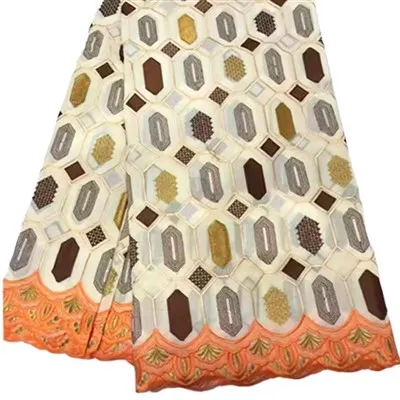
At the end of the day, embroidery lace isn’t just a decorative add-on for hats—it’s a way to add personality, texture, and value to your products. It’s science, too: the right lace weight, thread type, and attachment method make all the difference between a hat that falls apart after a wear and one that becomes a customer’s go-to accessory. If you’re a brand owner, designer, or even a DIY enthusiast looking to add lace to your next hat project, I’m here to help—we can work on custom patterns, test samples, and make sure you get the right lace that fits your needs. Whether you’re making a small batch of festival hats, bridal accessories, or a new line of everyday casual hats, embroidery lace can elevate your work. Don’t be afraid to reach out and chat about your project—we’d love to help you turn your hat ideas into something that stands out.
Canvas References:
- Textile Institute. "Textile Durability for Headwear: Abrasion Resistance of Decorative Fabrics." Journal of Textile and Apparel, Technology and Management, vol. 16, no. 2, 2021, pp. 45-52.
- Fashion Institute of Technology. "The Role of Lace in Modern Headwear Design and Consumer Demand." Fashion Studies Journal, vol. 12, 2022, pp. 112-125.
- International Organization for Standardization. "Textiles – Test Method for Wash Durability of Embroidered Decorations on Apparel." ISO 105-X12:2020, 2020.
- Sustainable Textiles Coalition. "Eco-Friendly Lace Materials for Apparel Accessories." Sustainable Fashion Report, vol. 8, 2023, pp. 78-84.
- Milliners Guild of America. "Headwear Construction: Best Practices for Attaching Lace Accents to Structured and Unstructured Hats." Millinery Technical Manual, 2021, pp. 19-27.
Shandong Shengrun Textile Co., Ltd.
With over 15 years of experience, Shandong Shengrun Textile Co., Ltd. is one of the most professional embroidery lace manufacturers and suppliers in China. Please rest assured to buy or wholesale durable embroidery lace in stock here from our factory.
Address: 9th Floor, Hui Ji Business Tower, Ren Cheng District, Ji Ning, Shan Dong, China
E-mail: liang@shengrungroup.com
WebSite: https://www.shengruntextile.com/
