If you’ve ever walked through a manufacturing floor and watched a mold close, inject molten metal, and pull out a perfectly shaped part in seconds, you know how efficient aluminum die casting molds are. As someone who’s spent 12 years supplying these molds to automotive, electronics, and aerospace teams, I get asked this question all the time: Can aluminum die casting molds be used for non-ferrous metals other than aluminum? The short answer isn’t a simple yes or no—it’s a nuanced, process-dependent discussion that ties directly to mold design, material science, and the unique properties of other non-ferrous metals. Let’s break this down so you can make the right choice for your next project. Aluminum Die Casting Mold
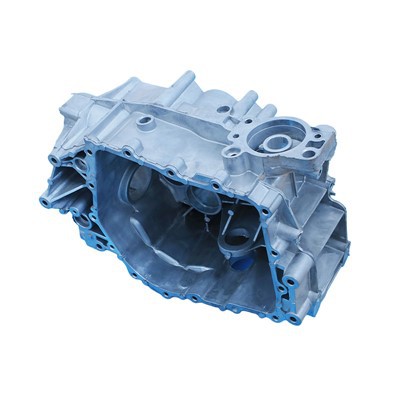
First, let’s ground ourselves in what makes aluminum die casting molds work. These molds are typically made from tool steels like H13, a hot-work tool steel that balances hardness, thermal conductivity, and resistance to thermal fatigue—critical because aluminum’s melting point hovers around 660°C (1220°F). When you inject molten aluminum, the mold sees rapid temperature swings from room temperature to several hundred degrees every cycle. H13 steel holds up to that, but its properties aren’t a perfect match for every non-ferrous metal.
Let’s start with the non-ferrous metals most people ask about: zinc, copper, magnesium, and lead. Each has distinct melting points, viscosity, and reactivity that change how they interact with a standard aluminum die casting mold. Let’s take zinc first—one of the most common secondary non-ferrous metals in die casting. Zinc’s melting point is just 419°C (786°F), way lower than aluminum’s. That lower melting temperature is a game-changer. Because the mold doesn’t experience as extreme a temperature spike, and zinc is less reactive than aluminum, the same mold that runs aluminum can often run zinc without major modifications. I’ve had a client in the hardware industry switch their mold from aluminum die casting to zinc for producing lock components—they only adjusted the injection pressure slightly, and the mold ran 20% longer cycles because the lower temperature reduced thermal stress. That’s a huge win for small to mid-volume jobs where you don’t want to invest in a new mold.
But here’s where it gets tricky: copper. Copper melts at around 1085°C (1985°F)—nearly 400 degrees hotter than aluminum. Running molten copper through a mold designed for aluminum? That’s a non-starter. The H13 steel in the mold would soften rapidly at that temperature, leading to surface erosion, dimensional warpage, and failed parts. Even if you crank up the mold’s cooling system, the thermal load would be too much. I once advised a aerospace engineer who wanted to use his aluminum die casting mold for copper turbine blades—we had to tell him that not only would the copper melt the mold in a few runs, but the high viscosity of molten copper would also cause it to stick to the mold surface, leading to part defects. Copper needs molds made from materials with far higher heat resistance, like tungsten carbide or specialty tool steels rated for 1200°C (2192°F) and above. So copper is a hard no for standard aluminum die casting molds.
Next up: magnesium. Magnesium’s melting point is 650°C (1202°F)—almost identical to aluminum’s. That makes it seem like a perfect candidate, right? But magnesium has a big catch: it’s highly flammable when molten, especially at temperatures above its melting point, and it’s extremely reactive with many mold materials. H13 steel can react with molten magnesium, forming brittle intermetallic compounds that flake off the mold surface and contaminate the part. Even if you coat the mold, the high thermal cycling of die casting can wear down the coating, leading to defects over time. A customer of mine who makes portable electronics casings tried running magnesium in an aluminum die casting mold, but after 5,000 cycles, the mold’s cavity surface had developed pitting that ruined the part finish. We ended up supplying a modified mold with a proprietary coating and tighter dimensional tolerances specifically for magnesium—so while the same base mold design could be adapted, standard aluminum die casting molds aren’t ideal for high-volume magnesium runs.
Lead is another non-ferrous metal that comes up. Lead’s melting point is just 327°C (621°F), way lower than aluminum. But lead is soft, has high viscosity when molten, and is highly corrosive. Wait, you might think a lower melting point makes it safe for aluminum molds—but lead’s corrosive properties are a problem. Lead can penetrate the grain boundaries of H13 steel over time, causing stress corrosion cracking. That’s a failure that happens gradually, not all at once. I had a job with a battery manufacturer who tried using their aluminum die casting mold for lead terminal parts; after 3 months of running, the mold had developed internal cracks that required replacement. So even though lead’s melting point is low, its corrosion means it’s not a long-term fit for standard molds.
Now, let’s talk about the factors that make a mold compatible with a new metal—this is where your supplier (that’s me, by the way) comes in. It’s not just melting point; it’s thermal conductivity, mold material, coating, injection parameters, and cycle time. For example, zinc’s thermal conductivity is higher than aluminum’s—so if you’re running zinc in a mold designed for aluminum, you might need to adjust your cooling lines to prevent premature solidification of the part. For magnesium, you’d need to adjust the venting system to prevent flammable magnesium vapors from building up in the mold cavity, which is a safety hazard.
Another thing to consider: volume. If you’re running a short, low-volume job (say, 10,000 parts), a standard aluminum die casting mold might work for zinc or even magnesium, with only minor tweaks. But if you’re running 100,000+ parts, you’ll need to invest in a mold tailored to the metal’s properties to avoid downtime and replacement costs. I’ve seen clients cut corners by using their existing aluminum molds for non-aluminum metals, only to end up with higher long-term costs from mold repairs, scrap parts, and lost production time.
Wait, you might be wondering—what about specialty non-ferrous alloys? Like aluminum-silicon alloys with small amounts of other metals, or even exotic alloys? The same rules apply: if the alloy’s melting point and reactivity are close to aluminum, you can adapt a standard mold. If it’s higher, like copper-nickel alloys, you’ll need a custom mold.
Let me share a recent example to make this concrete. A client who makes automotive fuel system components came to me wanting to switch from aluminum die casting to zamak, a zinc alloy, because it has better corrosion resistance and lower weight. They originally thought they’d need to buy a new mold, but we analyzed their existing aluminum die casting mold, adjusted the injection pressure and cooling cycle time, added a thin protective coating to prevent minor zinc sticking, and got them up and running on their existing mold. They saved over $20,000 in mold tooling costs, and the mold is still running reliably after 8 months of production. That’s the kind of flexibility aluminum die casting molds offer when you know what adjustments to make.
But let’s be clear: there are limits. If your non-ferrous metal has a melting point more than 100°C (212°F) higher than aluminum, standard aluminum die casting molds won’t work. Copper, as we mentioned earlier, is way above that. Even some brass alloys, which melt around 900°C (1652°F), will degrade an H13 mold in a matter of cycles. For those metals, you’ll need molds made from heat-resistant materials like hot work die steels with higher alloy content, or tungsten carbide.
Another angle: part quality. When you use a mold not designed for the metal, you’ll see defects like cold shuts (incomplete part filling), porosity, or dimensional inaccuracies. These defects aren’t just a nuisance—they can lead to parts failing safety tests, especially in automotive or aerospace. I once had a medical device client who tried running magnesium in an aluminum mold; the parts had surface inconsistencies that made them fail biocompatibility tests. We had to supply a custom magnesium mold with a smoother cavity surface, and they’ve been using that for all their high-volume medical components ever since.
So, to circle back to the original question: Can aluminum die casting molds be used for non-ferrous metals other than aluminum? The answer is: sometimes, but with big caveats. It works well for low to medium volume runs of zinc, especially zamak, because of their low melting points and low reactivity. It can work for magnesium if you’re willing to make modifications to the mold’s coatings, venting, and cooling, but high-volume runs will need a custom mold. It does not work for metals like copper, brass, or lead long-term, due to melting point and corrosion issues.
As someone who’s been supplying aluminum die casting molds for over a decade, my advice is to talk to a mold specialist before you make the switch. Don’t just guess—share your part design, production volume, and target metal, and we can tell you if your existing mold can be adapted, or if you need a new one. Many manufacturers assume they have to start from scratch for new metals, but a well-designed aluminum die casting mold can be surprisingly versatile when paired with the right adjustments.

If you’re considering testing your aluminum die casting mold for a different non-ferrous metal, or you’re ready to invest in a custom mold for high-volume production, reach out to us to discuss your project. We’ll walk through the material properties, design modifications, and cost savings to make sure you get the right mold for your needs.
Aluminum Die Casting Partsr References
- Digital Engineering Library. (2022). Die Casting Mold Material Selection for Non-Ferrous Alloys. Society of Manufacturing Engineers.
- ASM International. (2019). Properties of Hot-Work Tool Steels Used in Die Casting. ASM Handbook, Volume 3: Alloy Phase Diagrams.
- Zinc Development Association. (2021). Zamak Die Casting: Compatibility with Existing Aluminum Die Casting Tooling. International Zinc Association.
- magnesium.org. (2020). Die Casting Magnesium: Mold Design Considerations and Limitations. Magnesium Industry Council.
- Copper Development Association. (2018). High-Temperature Die Casting for Copper Alloys: Mold Material Requirements. Copper Development Association.
Suzhou Ruide Die-Casting Mold Co., Ltd.
As one of the leading aluminum die casting mold manufacturers and suppliers in China, we warmly welcome you to buy durable aluminum die casting mold made in China here from our factory. All customized products are with high quality and competitive price. Contact us for pricelist.
Address: No.2, Wanchen Road, Huayang Village, Wangting Town, Xiangcheng District, Suzhou City, Jiangsu Province
E-mail: mia@cnrdmj.com.cn
WebSite: https://www.cnrdmold.com/
