If you’ve ever spent a third shift patrolling a warehouse at 2 a.m., half-listening to the hum of forklifts and wondering if that faint rustle by the loading dock is just a loose tarp or something a little less harmless, you’ve probably thought about security wires. As someone who’s been in the security wire supplier game for the better part of 12 years—my hands still remember the weight of the first bulk spool I unloaded in 2011—I hear this question all the time from warehouse managers: Are security wires actually effective, or are they just another overhyped piece of equipment that looks good on a spec sheet but does nothing when it counts? Security Wire
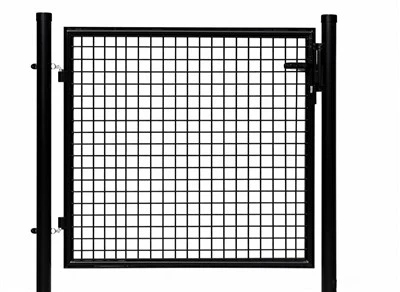
The short answer is yes, but only if you’re using them right, not just stringing them along a fence and calling it a day. Let’s start with what most people don’t realize: not all security wires are created equal. Back when I first got started, a lot of warehouses were using regular galvanized steel wire for perimeter fencing, thinking it would deter thieves. Big mistake. Regular steel wire rusts in six months if a warehouse is near a shipping bay that leaks rainwater, or if it’s located in a area with high humidity. Thieves can snip through that with a pair of bolt cutters in 10 seconds flat, no problem.
Modern security wires are different, and that’s where the effectiveness comes in. I don’t sell the cheap stuff—ours are made with high-tensile steel, often with a vinyl or nylon coating to resist corrosion, and they have a tensile strength of at least 150,000 PSI. To put that in perspective, a pair of standard bolt cutters can only exert about 10,000 PSI. Thieves who come after warehouse goods aren’t usually masterminds; they’re looking for a fast, easy score. If they run into a security wire that takes them 30 seconds to cut, by which time a nearby motion sensor is going off, or a security guard’s radio has crackled to life because of the vibration, they’re almost always going to move on to the next warehouse. That’s the deterrent people miss—security wires aren’t just a barrier, they’re a early warning system, the first layer of defense before anyone even gets close to your inventory.
But here’s the thing: effectiveness drops off a cliff if you don’t install them correctly. I’ve had a client call me three years ago, panicking because someone had stolen 10 pallets of electronics from their warehouse. When I drove out to take a look, I saw their mistake: they’d strung a single line of security wire along the bottom of their fence, sagging in the middle, and spaced the posts 20 feet apart. That sag meant a thief could lift the wire, crawl under it, and no alarm would go off. Those weak posts? They bent when someone pushed on them, so the wire wasn’t taut enough to trigger the vibration sensors we supply with the wire. Last month, another client of mine did it right: they ran three lines of security wire—bottom, middle, top—with posts every 8 feet, and each line is connected to a basic vibration alarm. Two weeks after installation, the alarm went off at 1:17 a.m. when a group of thieves tried to snip the middle wire. The local police were there in 7 minutes, and they caught the guys red-handed. That’s the kind of result security wires can deliver when done right.
I often hear the counterargument: “Why bother with security wires when I have CCTV and motion sensors?” The answer is simple: layers. CCTV can’t see through a dark side yard, and motion sensors can be tripped by a stray deer or a warehouse dog. A properly installed security wire is a physical, permanent barrier that doesn’t rely on electricity (though many work with alarms) or batteries. If the power goes out, your security wire is still there, still taut, still making noise if someone touches it. Last winter, a client of mine in a area got hit with a 12-hour ice storm. All their power was out, their CCTV was down, but their security wire was still doing its job. A thief tried to climb the fence, pressed against the bottom wire, and the vibration was loud enough to wake the night security guard who was working from a generator-powered desk 50 yards away. That’s the kind of reliability you can’t get from a camera.
Now, let’s talk about the myths that make people write off security wires as ineffective. The first is that “thieves use angle grinders, so a little wire won’t stop them.” Yeah, angle grinders exist, but they’re not as stealthy or fast as people think. An angle grinder makes a high-pitched, ear-splitting noise that can be heard a quarter of a mile away. Most warehouse areas are in industrial parks, where there are other businesses open during the day, but at night, even a little noise draws attention. A thief with an angle grinder is going to be noticed way faster than one with bolt cutters, and the sound is enough to make most amateurs bail. Plus, our security wires are coated with a special material that makes it harder to get a good grip for grinding, so it takes longer to cut through, and that extra time is all you need.
Another myth is that security wires are too expensive. I’ve had a manager tell me once that he’d rather hire an extra night guard than spend money on security wire. Let’s do the math: a good night guard makes about $18 an hour, that’s $144 a night for 8 hours, 7 days a week, that’s over $7,500 a month. A 500-foot run of our security wire, with posts, vibration sensors, and installation, costs around $1,200. That’s a one-time cost that will last 10+ years, and it’s a lot more reliable than a human who gets tired, falls asleep, or calls in sick. Last year, a client of mine had an extra night guard call in sick, and the warehouse was broken into. The security wire would have caught the thief, but they skipped that to save a few bucks, and lost $40,000 worth of inventory.
I know, I know, every warehouse is different. A small, 10,000-square-foot warehouse storing office supplies has different needs than a 100,000-square-foot facility storing high-value electronics. That’s why we don’t sell a one-size-fits-all product. For a small warehouse, we’ll recommend a single line of security wire with basic contact alarms, installed along the front and side fences. For a large warehouse with hazardous materials, we’ll install three lines of high-tensile security wire, paired with heavy-duty vibration sensors and connected to the local police’s non-emergency line. We also work with clients to make sure the wire is at the right height—too low and someone can crawl under it, too high and someone can jump over it. The sweet spot is 36 inches for the bottom line, 60 inches for the middle, and 84 inches for the top. That way, you cover all the entry points.
Let me also talk about long-term performance. I have a client who’s been using our security wires for 8 years now, and the only maintenance they’ve had is tightening a few posts after a big storm. They haven’t had a single perimeter break-in in that time, whereas before they installed the wire, they had four break-ins in three years. That’s the kind of track record that matters. Security isn’t about stopping every single thief—it’s about making your warehouse the hardest target on the block. Thieves will drive past your warehouse if they see that security wire, because they know it’s going to take too long, and the risk of getting caught is too high.
I’ll be honest, there are times when security wires aren’t the right solution. If your warehouse is in a area with a lot of theft from inside the building—like employees stealing small items—security wires won’t help with that. But if you’re worried about perimeter breaches, loading dock theft, or thieves cutting through fences to get to your inventory, security wires are one of the most effective, cost-efficient tools you can invest in.
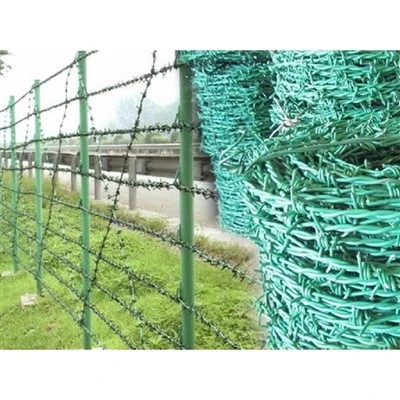
At the end of the day, warehouse security is about layers, and security wires are the foundation of that first layer. They’re not a silver bullet, but they work when installed correctly, used in the right places, and paired with other security measures like CCTV and patrols. If you’re tired of checking your fence every morning for cuts, if you’ve had enough of losing inventory to thieves who think your warehouse is an easy target, give us a call. We don’t push products that don’t work, and we don’t sell you something you don’t need. We’ll come out, take a look at your warehouse, and recommend exactly what will work for you, no pressure, no hype. Don’t wait until the next break-in to upgrade your security—invest in something that will stand the test of time, and keep your inventory (and your peace of mind) safe.
N Style Gates References:
- National Institute of Justice. (2021). Perimeter Security for Commercial Warehouses: A Practical Guide. U.S. Department of Justice.
- Security Industry Association. (2022). High-Tensile Security Wires: Deterrence and Detection Capabilities. SIA Annual Physical Security Report.
- International Society of Automation. (2020). Integrating Physical Barriers and Alarm Systems for Industrial Perimeter Protection. ISA Transactions.
- Bureau of Justice Statistics. (2023). Warehouse Theft and Perimeter Security Effectiveness: A Decade of Data. U.S. Department of Justice.
- Steel Manufacturers Association. (2021). Tensile Strength and Corrosion Resistance of High-Tensile Steel Security Wires. SMA Technical Bulletin No. 17.
Firmstone (Tianjin) International Limited
Firmstone (Tianjin) International Limited is one of the most professional security wire manufacturers and suppliers in China, featured by quality products and good service. Please feel free to buy bulk advanced security wire made in China here from our factory. Welcome to contact us for quotation.
Address: 411, Prophet Valley, No.10, Meiyuan Road, Huayuan Industrial District, Xiqing District, Tianjin
E-mail: vivianjia@firmstonewire.com
WebSite: https://www.firmstonefactory.com/
