Hey there, fellow corrosion control crew. If you’re deep in the market for ICCP Titanium Anodes—whether you’re a pipeline engineer, shipyard supervisor, or someone just tired of fighting rust that keeps winning—you’ve probably stumbled on a million random Reddit threads, forum rants, and half-baked blog posts asking one specific question: Do ICCP Titanium Anodes even need to be grounded? As a supplier who’s fielded this question at least a dozen times a week for the last 8 years, I’m gonna break this down like we’re sitting around a workbench with a cold coffee, no overly fancy textbook jargon, just the real, usable info you need. ICCP Titanium Anodes
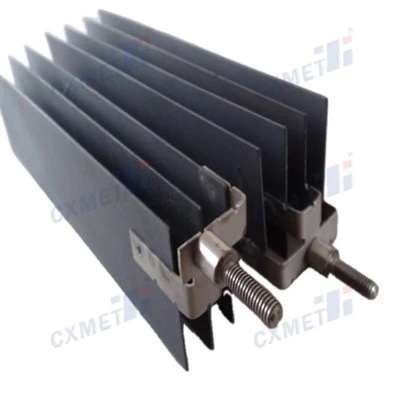
First off, let’s hit the reset button on what ICCP even is, because if you’re skimming this, you might be mixing up basics and accidentally wasting time on bad advice. ICCP stands for Impressed Current Cathodic Protection—sounds complicated, right? But it’s basically a system that stops metal (think steel pipelines, offshore rigs, ship hulls) from rusting by feeding a low, controlled electrical current into the metal. That current neutralizes the corrosion reaction before it can take hold. The hero here in most ICCP setups? Titanium anodes. They’re the workhorses because titanium is stupid corrosion-resistant (thanks to that thin, tough oxide layer it forms automatically) so they last way longer than old graphite or silicon anodes. No replacing them every 5 years, which is a huge win for projects that sit in harsh environments—like saltwater or underground soil.
Now, the grounding question. Let’s start with what grounding actually means in this context, because a lot of people throw that term around like it’s one-size-fits-all, and it’s not. When we talk about grounding in ICCP, we’re not talking about the same thing as plugging your power tool into a three-prong outlet to prevent electric shock. Wait, okay—there is an electric shock component, but that’s a side note. Mostly, in ICCP, “grounding” refers to creating a low-resistance electrical path between your system and the surrounding environment (like seawater or soil) so the ICCP current can flow properly. Confused? Don’t be. Let’s split this into two big categories of ICCP setups, because that’s where everything changes: buried/underground systems (pipelines, storage tanks) and immersed systems (ships, offshore wind foundations, underwater pipelines).
Let’s start with the underground stuff first, since that’s what we sell most of our titanium anodes for. For buried ICCP systems—like a long oil pipeline running through farmland or a massive underground fuel storage tank—your titanium anodes don’t need to be “grounded” in the traditional building-ground sense. Wait, hold on—before you get mad at me, let’s clarify. The ICCP system itself already has something called a Reference Electrode, which is basically a sensor that sits in the soil or water, measuring the potential of the steel you’re protecting to make sure the current is flowing at the right level. That reference electrode is your “ground” for the electrical circuit of the ICCP system. Your titanium anode is the one pushing the current out, and the steel pipeline is the one receiving it. So the current goes from the anode, through the environment, to the pipeline, and back through the reference electrode to the power supply. That’s a closed loop—no extra grounding needed for the anode itself. Wait, but what about safety? If someone accidentally cuts the anode cable, could that be a shock hazard? That’s where a different kind of grounding comes in—like connecting the ICCP power supply’s negative terminal (the safety ground) to the building’s structural ground, same as you would for any other electrical equipment. But that’s a system-level safety thing, not something you do to the titanium anode itself for corrosion performance.
Now, the immersed side of things—ships, offshore rigs, underwater pipelines. This is where people get way more mixed up. Let’s take a ship’s hull first. If you’ve got a titanium anode hanging off the side of a boat to protect the steel hull, does that need grounding? Short answer: No, but wait—there’s a big “but” here. The hull is already sitting in seawater, which is a super conductive environment. The current from your titanium anode flows straight through the seawater to the hull, no extra path needed. But if you’re working on a small, isolated system—like a remote underwater wellhead, or a floating wind turbine that’s only got a small ICCP setup—you might hear some old-school guys saying you need to ground the anode to the seabed. Let’s test that. If your seabed is rocky, or has high-resistance sediment, that extra ground path is actually useless. It doesn’t help the current flow, and it doesn’t do anything for corrosion protection. But wait—what about stray currents? Oh right, stray currents are a whole separate issue, but they’re super common. Like, if there’s another ICCP system nearby, or a DC power line running parallel to your pipeline, stray currents can mess things up. But grounding your titanium anode isn’t the fix for that—usually you add insulating flanges to the pipeline, or adjust your current output, not bolt another ground to the anode.
Wait, let’s talk about the times people do incorrectly ground titanium anodes, and what goes wrong when they do that. I’ve seen this mistake a dozen times. A customer will call us, panicking, because their new ICCP system isn’t working, and they say “I grounded the titanium anode just like you told me to ground my power tools!” And sure enough, they bolted a copper ground rod to the anode cable, stuck it in the soil next to the anode. What happens? That ground creates a shortcut for the ICCP current. Instead of flowing all the way out to the pipeline they’re supposed to protect, most of the current jumps straight to the ground rod, then to the soil. So their pipeline doesn’t get enough current, rust starts popping up, and they’re out thousands of dollars in downtime. That’s the #1 mistake we see with new guys—confusing safety grounding for power tool use with the closed electrical loop ICCP needs.
Now, let’s get into the nitty gritty for anyone who wants the engineering deep dive (don’t worry, it’s not as boring as it sounds). Titanium anodes used in ICCP are usually coated with mixed metal oxides (MMO, if you’ve heard that term—like platinum group metals on top of the titanium core) because that coating makes them stable, so they don’t degrade when pushing current. The titanium core itself is non-conductive? No, wait, it’s conductive, but the MMO coating is the part that actually releases the current into the environment. When you apply extra grounding to the anode, you’re adding a parallel resistance path. The ICCP power supply is designed to push a specific amount of current through the anode and the environment. Adding that extra ground lowers the total resistance of the loop, which makes the power supply push more current than it’s rated for. That overcurrent kills the MMO coating way faster, which means your expensive titanium anode only lasts 2 or 3 years instead of the 10+ it’s supposed to. We had a customer a few years back who did exactly that—they grounded a set of anodes on a new offshore rig, and the anodes corroded through in 18 months instead of 12 years. They called us, embarrassed, and we fixed their setup, but it cost them way more than if they’d just gotten the right info from the start.
Wait, but hold on—are there any cases where grounding a titanium anode for ICCP is actually a good idea? Let’s not be a total downer here. There’s one specific case: if you’re using a titanium anode as a “ground bed” for the ICCP reference electrode? No, wait, no. Wait, if you have a small, low-power ICCP setup—like for a small steel boat that’s only used in freshwater (which is way less conductive than saltwater). In freshwater, the environmental resistance is way higher, so sometimes adding a small, dedicated ground path from the anode to the surrounding water/soil can help the current distribute better. But even then, that’s not the same as the safety grounding you use for tools. It’s a minimal, intentional low-resistance path, not a random bolted ground rod. And that’s only for freshwater small systems—never for large buried or saltwater setups.
Also, let’s address the elephant in the room: safety. I know a lot of you are worried about electrical safety, especially if you’re working around heavy equipment or people walking near ICCP setups. So let’s settle this once and for all: do you need to ground your ICCP system for safety? Yes. But not the anode itself. The safety ground is for the power supply unit, the control panel, and any exposed metal parts of the ICCP system that someone could touch. That’s a standard electrical safety practice for any DC power system, not specific to titanium anodes. The anode is in the environment—saltwater or buried soil—so it’s not a hazard for someone touching it. I’ve held a live titanium anode that was part of a running ICCP system (don’t do this at home, I had proper PPE) and it didn’t even give a tingle. The current is too low and too spread out to affect a human. That’s not the part you need to ground for safety.
Let’s also bust a common myth I see all over the internet: “Titanium is non-conductive, so you need to ground it to make it work.” That’s straight up wrong. Titanium is a metal—way more conductive than the steel you’re protecting, honestly. The only thing that matters for the anode’s function is that the MMO coating is intact, and the current can flow from the anode through the coating into the surrounding environment. The titanium core is just a rigid, stable base for that coating. Grounding it doesn’t improve conductivity—it creates that shortcut we talked about earlier.
Wait, let’s wrap this up with a quick troubleshooting tip, because that’s what most of you are here for. If your ICCP system is underperforming, and you suspect grounding is the problem, here’s how to check: First, test the voltage of the steel you’re protecting. If it’s not within the standard -0.85 to -1.15 V vs. CSE (copper sulfate reference electrode) range, that’s a red flag. Next, check the current output of your power supply. If it’s way higher than the design specs, you probably have a stray ground somewhere—either from a bad ground rod, or accidental contact between the anode cable and another metal pipe that’s not part of your system. And if you did bolt a ground rod to your anode cable, that’s almost certainly the issue.
At the end of the day, the whole point of using titanium anodes for ICCP is that they’re low-maintenance, long-lasting, and reliable. Mucking them up with incorrect grounding is a waste of money, time, and the whole reason you chose titanium in the first place. If you’re planning a new project, or you’re dealing with a system that’s acting weird, don’t guess—reach out to someone who actually works with these anodes every single day. We’ve sold thousands of titanium anodes to projects all over the world, from cross-country pipelines to superyachts, and we know what works, what doesn’t, and what that grounding myth is really all about.

If you’re in the market for ICCP Titanium Anodes, need help sizing a system, or have questions about your specific setup, don’t hesitate to reach out. We’re here to make corrosion control less confusing, so you can get back to your project without the headaches.
Platinum Titanium Anode References
- National Association of Corrosion Engineers (NACE). Impressed Current Cathodic Protection for Buried and Submerged Structures, 2020.
- ASTM International. Standard Guide for Cathodic Protection of Ship Hulls and Other Marine Structures, 2018.
- Metal Finishing Magazine. “Common Mistakes in ICCP System Design and Installation”, Vol. 112, No. 5, 2019, pp. 32-37.
Shannxi CXMET Technology Co., Ltd.
As one of the most professional iccp titanium anodes manufacturers and suppliers in China, we also support customized service. Please feel free to buy high-grade iccp titanium anodes for sale here from our factory. Good service and quality products are available.
Address: 191 Integer Rd, 2nd StrLA 08219, P.R China.
E-mail: sales@cxmet.com
WebSite: https://www.cxmetanode.com/
