If you’ve ever stood next to a slurry pump on an active mine site, a construction aggregate plant, or a wastewater treatment operation, you know it’s not just a pump—it’s the workhorse keeping your operation moving. But here’s the thing I hear every week from new clients: “Why is my slurry pump power consumption per hour so much higher than the spec sheet said?” I’m in the slurry pump supply business, and that question doesn’t surprise me. I’ve worked with operators from small gravel pits to large copper mines across three continents, and the gap between theoretical power numbers and real-world usage is one of the biggest pain points we help solve. Today, I want to break down slurry pump power consumption per hour like I would with a new operator standing in front of our service van after a site check, no jargon, no fluff, just what actually matters for your bottom line. Slurry Pump
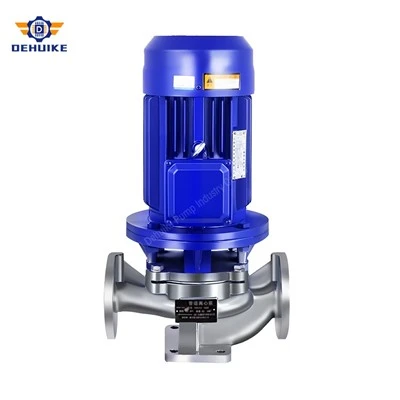
First, let’s start with the basics so we’re all on the same page. Slurry pumps don’t move water—they move a mix of solids and liquid, which makes their power requirements way more complex than a clear-water pump. When we talk about “power consumption per hour,” we’re not just talking about electricity going to the motor; we’re talking about how much energy the pump uses to move that dense, abrasive mixture from point A to point B. The formula for theoretical power is simple: it’s (flow rate in gallons per minute x total dynamic head, or TDH, in feet x specific gravity of the slurry) divided by 3960. But in the real world, nothing ever hits that number exactly. That’s where efficiency comes in, and that’s where most operators waste money without even realizing it.
I remember a mine in northern Ontario we started working with two years ago. Their spec sheet said their 8-inch slurry pump should draw 120 kW per hour at full load. But when we did a site audit, we found they were averaging 165 kW per hour—37% higher than the spec. Their TDH was off because the discharge line had been extended by 120 feet without upsizing the pipe, their pump impeller was worn thin from 18 months of unregulated operation, and they were running the pump at 80% load instead of the sweet spot between 90-110% that most slurry pumps are designed for. That extra 45 kW per hour added up to over $110,000 a year in unnecessary electricity costs. That’s the kind of number that makes operators sit up and listen, right?
Now, let’s get into the specific factors that drive slurry pump power consumption per hour, because those are the levers you can adjust to save money. First and biggest: slurry density and solids content. The more solids you have in your slurry, the higher the specific gravity, and the more power the pump needs. Clear water has a specific gravity of 1, so a slurry that’s 50% solids by volume might have a specific gravity of 1.5, which means it needs 50% more power to move the same flow at the same head. I’ve seen plants where operators started pushing a slurry that was 60% solids instead of 45% to boost production, and their power bill jumped by 28% in a month—no extra output, just higher energy use. That’s a decision that gets made in the control room without realizing the ripple effect on power costs.
Next is pump efficiency, which changes over time. Slurry pumps handle abrasive solids, so parts like impellers, liners, and casings wear down. A new pump might have an efficiency of 75-80%, but once the impeller is worn by 10%, that drops to 65-70%, and power consumption goes up by 15-20% to move the same slurry. I had a quarry client in Texas a few years ago who skipped scheduled maintenance on their 6-inch pump for 12 months. When we finally inspected it, the impeller had worn down by almost a quarter, and their power consumption per hour was up 22%—that’s $35,000 a year in extra costs. The kicker? Replacing the worn parts cost $12,000, which would have paid for itself in six months. Too many operators wait too long to do maintenance because they don’t track how worn parts are affecting their power use hour over hour.
Then there’s total dynamic head, or TDH, which is the total amount of energy needed to move the slurry from the pump suction to the discharge point. TDH has two parts: static head (the vertical distance the slurry has to be lifted) and friction head (the energy lost to the slurry moving through pipes, bends, valves, and other fittings). A lot of operators only think about static head, but friction head is where a lot of power gets wasted. If your discharge pipe is too small, or if you have a bunch of sharp 90-degree bends, friction head goes up, and your pump has to work harder—using more power per hour—to push the slurry through. I worked with a wastewater treatment plant in Germany that had 20 feet of 4-inch pipe on their sludge transfer pump, but they could have upsized to 6-inch for a small cost. That one change cut their friction head by 40% and their power consumption per hour by 18%—no new pump, just a pipe upgrade.
Another big one is pump sizing and operating point. A lot of operators size their pump to handle peak load, then run it at part load all the time to avoid overcapacity. But slurry pumps aren’t like clear-water pumps—their efficiency drops a lot when you run them more than 10% below their best efficiency point (BEP). If your pump’s BEP is at 1000 GPM, and you’re only running it at 700 GPM to match your average flow, you’re using 20-25% more power per hour than you would if you had a slightly smaller pump sized for your actual average load. I see this all the time in mines that have a lot of variability in ore throughput. Instead of having two smaller pumps, they have one big pump running at part load, wasting power. The fix isn’t always buying a new pump—sometimes it’s trimming the impeller or adjusting the speed with a variable frequency drive (VFD) to get the pump closer to its BEP. A VFD alone can cut slurry pump power consumption by 10-30% because you’re only using the power you need, not running the pump at full speed when you don’t have to.
Now, let’s talk about how to actually measure and calculate your slurry pump power consumption per hour, because you can’t manage what you don’t track. Most plants have basic power meters on their motors, but those don’t account for the pump’s efficiency or how much power is actually going into moving the slurry, not just the motor itself. The best way is to do a site audit, which is what we offer as part of our service, but you can do a basic check too. First, write down the motor’s rated power (kW) and its efficiency (you can find that on the motor nameplate). Then, measure the actual current draw of the motor using a clamp meter—make sure to do this when the pump is running at full load. The formula for actual power is: (current x voltage x power factor x 1.732) / 1000, for three-phase motors, which is what most slurry pumps use. That gives you real power in kW, so per hour, that’s exactly how much electricity the pump is using. Then, compare that to the theoretical power needed for your slurry’s density, flow, and TDH—difference means you’ve got waste to fix.
I had a construction aggregate client in Florida who was scratching their head because their power bill was $8,000 a month higher than the spec sheet. They did this basic check and found their actual power was 190 kW per hour, but their theoretical power should have been 145 kW. We went on site and found their impeller was worn 15% (from not replacing it on schedule), they had 150 feet of undersized pipe on the discharge, and they were running the pump at 75% of BEP. We helped them schedule impeller replacement, upsized a section of the discharge pipe, and installed a VFD. Within three months, their power consumption dropped to 150 kW per hour, saving them $42,000 a year—enough to cover the cost of the VFD, pipe, and impeller four times over. That’s the kind of tangible result that makes all the difference.
Now, let’s bust a few common myths I hear all the time. First myth: “All slurry pumps from the same brand have the same power consumption.” No way. Even two pumps of the same size can have different efficiencies depending on their design—some pumps are made for high abrasion at lower flow, others for high flow at lower head, and each is tuned differently. I’ve seen two identical-looking pumps on the same site, same age, same slurry, with a 10% difference in power consumption per hour. The difference was in the impeller design—one was a closed impeller, the other was an open one, better suited for their slurry. Second myth: “Running a slurry pump at full load is always the most efficient.” That’s only true if it’s at BEP. Run it above BEP, and efficiency drops too, so power use goes up. You have to find that sweet spot between 90-110% of BEP where efficiency is highest, regardless of load. Third myth: “Higher upfront cost for a pump means higher power costs.” Not necessarily. We sell pumps that are slightly more expensive up front but have 5-10% higher efficiency, and clients see a payback in 6-12 months from lower power bills. That’s the value of working with a supplier who doesn’t just sell you a pump, but designs it for your specific application.
One thing I always emphasize is that slurry pump power consumption per hour isn’t a static number—it changes as your operation changes. If you start processing harder ore, your slurry density goes up, power use goes up. If you add a new processing line and increase flow, your TDH might go up, power use goes up. If you skip maintenance, parts wear, efficiency drops, power use goes up. The key is to track these numbers consistently, not just when the power bill comes in. At our company, we help clients set up simple tracking spreadsheets that log pump run time, current draw, slurry density, and part condition every week. We also offer annual site audits to catch issues before they turn into big power drains.
I’ll leave you with a recent example from a copper mine in Arizona we’ve worked with for three years. When they first bought pumps from us, their power consumption per hour was 175 kW for their main slurry pump. Six months later, they increased throughput by 20%, and we helped them adjust the impeller and install a VFD so they could run at the new higher load without wasting power. Their power consumption ended up being 180 kW per hour—only a 3% increase for 20% more production. The mine manager told me that adjustment saved them over $120,000 a year in power costs, which they used to fund new safety equipment for their team. That’s what this is really about: not just selling a pump, but helping operations run smarter, more efficiently, and more profitably.
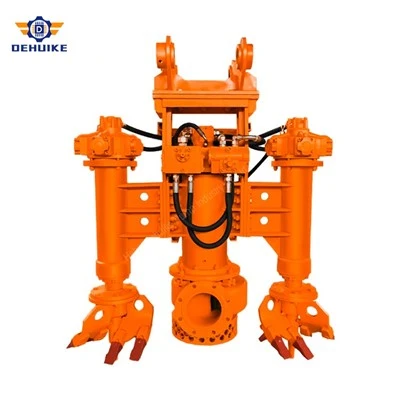
If you’re reading this and thinking, “I need to figure out why my slurry pump power consumption is higher than it should be,” or you’re looking for a pump that’s optimized for your specific application, we’re here to help. Every site is different, every slurry is different, and there’s no one-size-fits-all solution. We’ll come to your site, audit your current setup, walk through your process, and help you find ways to cut unnecessary power use without sacrificing performance. Don’t let hidden power drains eat into your profits—reach out to us for a consultation tailored to your operation.
Slurry Pump References
- Karassik, I. J., McGuire, G. C., & Messina, J. P. (2008). Pump Handbook (4th ed.). McGraw-Hill.
- American Water Works Association. (2010). Pumping Station Design (3rd ed.). AWWA.
- Hydraulic Institute. (2020). ANSI/HI 9.6.1-2020 Rotodynamic Pumps for Pump Intensity.
- Slurry Transport Association. (2017). Slurry Pumping Practice (2nd ed.). SGA Press.
Hebei Dehuike Pump Industry Co., Ltd.
Hebei Dehuike Pump Industry Co., Ltd. is one of the most experienced slurry pump manufacturers and suppliers in China, featured by quality products and good price. Please rest assured to wholesale durable slurry pump made in China here and get quotation from our factory. Customized orders are welcome.
Address: Building A, Shanggu Daguan, Jingxi District, Baoding City, Room 1708
E-mail: postmaster@dhkpump.com
WebSite: https://www.dehuikechina.com/
