As a metal sunglasses supplier who’s spent the last 12 years hand-selecting materials and assembling frames for clients across North America and Europe, I get asked about rim styles almost every day. Most people walk into our showroom thinking a frame is just a frame—until they try both a full rim and a half rim, then suddenly they’re weighing how much they sweat on construction sites, whether their glasses slip during morning runs, and if they care about showing off brand new prescription lenses. The other day, a regular customer who owns three sunglasses stopped mid-sentence and said, “I never realized there was more to it than ‘thick’ or ‘thin.’” That stuck with me because it’s not just about looks—it’s about engineering a pair of glasses that fits your life, especially when you’re working with metal, a material that’s both durable and versatile in ways plastic never will be. Metal Sunglasses

Let’s start with the basics, because metal frames have unique properties that change how full rim and half rim styles perform, unlike plastic which bends and wears differently. First, full rim metal sunglasses: the name says it all, right? The metal rim wraps completely around the edge of every lens, holding it in place along the top, bottom, and sides. Most of our full rim frames are made from surgical-grade stainless steel or titanium, both of which are soft enough to adjust at the temple tips for a custom fit, but hard enough to resist dents from dropping onto asphalt or banging against a warehouse shelf. When we’re building a full rim frame, we add tiny “lens retention knobs” inside the rim, small metal nubs that lock into the edge of the lens so it won’t twist, even if you’re lifting a heavy box or wiping your lenses with a rough cloth. For people who wear prescription lenses, that’s a huge detail—our full rim frames are the only style we recommend for high-index lenses, which are thinner and more prone to breaking if they’re not held firmly around the entire perimeter. I’ve seen customers come back for a replacement half rim frame after their lens cracked because the top edge was only held by a thin wire, so we always remind prescription buyers that full rim is the safer bet.
Half rim metal sunglasses, on the other hand, ditch the bottom rim entirely. Instead of wrapping around the lens, the metal runs only along the top edge, and two small metal “bail wires” hold the bottom of each lens, connecting it to the bottom of the temple arms. We mostly use light aluminum or beta titanium for half rim frames, because they’re lighter than stainless steel and don’t add extra weight to the bottom of the lens. The first half rim design was actually patented in the 1950s as a “no-line” frame for prescription glasses, but we’ve adapted it for sunglasses over the last 20 years because it gives a sleek, unbroken look that stands out on city streets and outdoor trails. That said, half rim frames have a clear limitation when it comes to lens security: if the bail wires are too thin, or if the metal flexes too much, the lens can slip out. Last year, a delivery driver came into our shop with a half rim pair that had lost his right lens entirely—he’d grabbed it to adjust it while carrying a stack of packages, and the pressure on the bail wires snapped them loose. For that reason, we only offer half rim frames with bail wires that are at least 0.8mm thick, and we test every batch by gently tugging on the lens to make sure it won’t shift even under pressure.
Now, let’s talk about fit, because that’s where most customers notice the difference long before they think about lens safety. Full rim metal frames have a broader contact area around the lens, so they distribute weight more evenly across the front of your face. That’s why we recommend full rim for people who wear larger frames, or who have round faces— the full rim balances the curve of the lens and prevents the glasses from slipping down the nose. We add rubber nose pads to all our full rim frames, and because the metal nose bridge is thick enough to adjust, we can bend it to fit the natural curve of someone’s nose, so the weight doesn’t press into the bridge or leave marks after a full day of wearing. I’ve had construction workers tell me they switch to full rim for job sites because the half rim’s lighter weight feels nice, but the top-heavy design slips when they sweat, especially under hard hats. “I keep shoving them up my face every time I climb a ladder,” one electrician said last month, “so the full rim stays put no matter what.”
Half rim frames, by contrast, have less front-facing weight, so they’re more comfortable for people who prefer a minimal, “invisible” look. The lack of a bottom rim means they don’t catch on collars or hats, which is why they’re popular with cyclists, runners, and people who wear baseball caps. The temple arms on half rim frames are also thinner—we often use a “twist temple” design that bends around the back of the ear instead of flat against the side, so they stay secure during high-movement activities. That said, because there’s no bottom rim, the weight of the lens pulls slightly downward, which can be uncomfortable for people with a high nose bridge or small ear lobes. We actually adjust half rim frames in our shop by bending the top rim slightly upward, so the lens sits higher on the face and doesn’t pull the frame down over the cheeks. We’ve had to do that for about 15% of the half rim orders we fulfill, which is a small detail, but it’s why most of our repeat half rim customers are regulars who know to stop by for a custom tweak.
Durability is another area where metal’s properties create distinct differences between the two styles. Full rim metal frames are nearly indestructible for everyday wear. The closed rim acts as a protective barrier for the lens, so even if you drop your glasses, the rim takes the impact instead of the lens. We test our full rim frames by dropping them from 6 feet onto concrete, and only 2% of the batches have any bent parts—usually just a tiny adjustment to the temple tips. The metal itself, whether stainless steel or titanium, resists rust and corrosion, which means full rim frames hold up better to salt air, sweat, and even occasional exposure to rain. For that reason, most of our marine clients (boat captains, fishermen) order full rim frames, because they’re exposed to saltwater and high humidity on a daily basis. “My last pair of half rim rusted through the bail wires in six months,” one commercial fisherman told me, “so I switched to full rim and haven’t had to replace a pair in three years.”
Half rim frames, while lightweight, are more vulnerable to two specific types of damage. First, the top rim is the only structural support for the lens, so a sharp blow to the top edge can bend the rim and shift the lens out of alignment. We recommend that half rim owners store their glasses in a hard case instead of a soft pouch, because a folded pouch can press on the top rim and cause it to bend over time. Second, the bail wires on half rim frames are thin, so they can snap if you bend the temple arms too far—especially if you wear your glasses on the back of your head, which a lot of people do. We’ve seen that mistake hundreds of times: someone wears their half rim on the back of their neck while they work, and the temple arm bends back until the bail wire snaps, leaving them with a lens that’s only held by one side. That said, we offer a repair service for that exact issue, so it’s not a dealbreaker—just something to keep in mind if you’re the type to rest your glasses on your head.
Style is probably the most subjective difference, but it’s also the one that leads most customers to pick one over the other. Full rim metal sunglasses have a classic, timeless look—think Ray-Ban Wayfarers or Oakley Frogskins, both of which use full rim metal frames because they never go out of style. The closed rim adds a sense of structure, so they work for both casual outings and professional settings—you can wear a full rim pair to a client lunch and no one will bat an eye, but you can also wear them to a music festival and they’ll stand out. We offer full rim frames in matte black, gold, and silver finishes, and we can add custom engravings to the inside of the temple arms, which is popular for gifts or brand merchandise.
Half rim frames, by contrast, have a modern, minimalist vibe that’s popular with younger customers or anyone who prefers a “no-frills” look. The open bottom rim makes the lenses look larger and more unbroken, so they have a sleek, almost futuristic feel. We’ve seen half rim frames featured in high-fashion magazines for the last decade, and they’re especially popular in urban areas where people want glasses that don’t look bulky or outdated. That said, the minimal design can be a downside if you’re someone who likes a bold look—half rim frames are subtle, and if you want something that stands out, full rim is the way to go. We also offer “semi-rimless” frames, which are a middle ground: they have a partial bottom rim instead of thin bail wires, so they’re lighter than full rim but more secure than half rim. Most of our customers who can’t decide between the two go for semi-rimless, which has the best of both worlds.
Wait, let’s make sure I’m not leaving out prescription customers, because that’s 60% of our business. For people who don’t wear prescription lenses, the difference between full rim and half rim is mostly looks and fit, but for prescription wearers, it’s a functional choice. Full rim frames can hold thicker, stronger prescription lenses without them bending or cracking, because the lens is held around the entire edge. Half rim frames, while they can hold prescription lenses, are only recommended for thinner lenses (1.6 index or higher) because the thin bail wires can’t support a thick, heavy lens. I’ve had a customer who needed a strong -8 prescription try a half rim pair and come back a week later with a cracked lens— the bail wires couldn’t support the weight, so the bottom edge of the lens pressed against the wire and split. Now, we always ask prescription customers for their lens power before recommending a style, which saves both of us a lot of hassle.
Another point: maintenance. Full rim frames are easier to clean, because the closed rim doesn’t have any small gaps where dirt or lotion can get trapped. You can wipe a full rim frame with a lens cloth in 10 seconds and be done. Half rim frames have tiny gaps between the bail wires and the lens, so dirt, sweat, and sunscreen can get stuck there, and if you don’t clean it out regularly, it can scratch the lens or cause the bail wires to rust. We recommend cleaning half rim frames with a soft brush (like a toothbrush) once a week to get rid of that gunk, which is a small step but makes a big difference in how long the frame lasts.
Over the last 12 years, I’ve helped thousands of customers choose between full rim and half rim, and the best advice I can give is to ask yourself what you’ll use the glasses for. If you’re someone who works with your hands, runs, cycles, or wears hard hats, go with a full rim frame for extra security and stability. If you want a lightweight, minimalist look for city outings, or if you hate having your glasses catch on collars, half rim is a great choice. And if you’re still unsure, come into our shop and try both—metal is malleable, so we can adjust the temple arms and nose bridges on the spot to see what feels right.
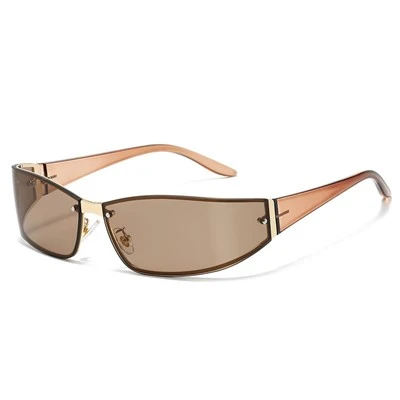
At the end of the day, metal frames are my favorite because they’re not disposable—they can be adjusted, repaired, and passed down, unlike plastic frames which crack after a year or two. Whether you pick full rim or half rim, the right pair should fit your lifestyle, not just your face. If you’re looking for a durable, high-quality metal sunglasses pair, or if you need help choosing the right style for your needs, feel free to reach out to our team to discuss your requirements. We’re here to help you find a pair that lasts, and works for you.
Eyeglasses Strap References:
- American National Standards Institute. (2021). Safety Standard for Ophthalmic Lenses and Frames. ANSI Z80.3-2021.
- International Organization for Standardization. (2018). Ophthalmic Optics—Frames for Spectacle Lenses. ISO 12870:2018.
- European Committee for Standardization. (2020). Personal Eye Protection—Sunglasses and Related Eyewear for General Use. EN 1836:2020.
Yiwu Suki Glasses Co., Ltd.
As one of the most experienced metal sunglasses manufacturers and suppliers in China, we also support customized service. We warmly welcome you to wholesale high quality metal sunglasses at competitive price from our factory. Contact us for more details.
Address: Floor 2, Building 1,No.9 Chengbei Road,Houzhai Street,Yiwu,Zhejiang,China
E-mail: alex@sukiglasses.com
WebSite: https://www.suki-glasses.com/
