As a supplier of polypropylene (PP) storage cabinets, I get this question almost every week from potential customers: “Are your PP storage cabinets durable?” It makes sense—when you’re investing in storage solutions, whether for a warehouse, garage, office, or even a school lab, you want something that won’t crack, warp, or fall apart after a few months of use. Over the years, I’ve seen firsthand how people’s perceptions of plastic storage can be skewed by the cheap, flimsy bins you pick up at a big-box store for $10. But PP storage cabinets are a totally different product. Let me break this down, based on what I’ve learned from working with the material for 12 years, answering thousands of product questions, and watching how our cabinets hold up in some of the toughest environments imaginable. Pp Storage Cabinet
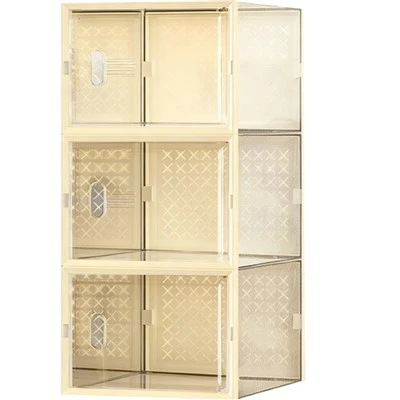
First, let’s start with what PP actually is. Polypropylene is a thermoplastic polymer that’s made from propylene, a byproduct of natural gas processing. What makes it stand out from other plastics, like polyethylene (PE) or PVC, is its molecular structure. PP has a higher melting point—around 320 degrees Fahrenheit, compared to low-density PE’s 212 degrees, which means it won’t soften or sag when you’re storing hot items, say, tool parts that came straight out of a manufacturing oven, or even just leaving it in a hot garage during a Texas summer. That’s a big deal for durability. But strength is about more than temperature resistance. PP has a high impact strength, meaning it can take a hit without breaking. I’ve had customers who use our cabinets in construction sites, where they get knocked around by ladders, dropped tools, even forklift forks sometimes. Sure, a cheap plastic bin would crack the first time it gets hit, but our PP cabinets? They flex. That’s not a flaw—polypropylene is inherently flexible, which means it absorbs impact instead of transferring it straight to the material’s core. It only fractures if the impact is extreme, like if you drop a 50-pound cinder block directly on the corner, and even then, it’s less likely to shatter into sharp pieces than, say, polystyrene.
But here’s where a lot of suppliers cut corners, and it’s a difference you’ll see right away. Not all PP is created equal. Our company uses virgin polypropylene, not recycled. Virgin PP has a consistent molecular structure, so every sheet is the same thickness, every molded part has the same strength. Recycled PP, on the other hand, can have impurities from old plastic bottles, packaging, or other products that weaken the material over time. It also breaks down faster with repeated heating and cooling, or exposure to chemicals. I once had a customer switch to a cheaper recycled PP cabinet for a warehouse because he thought he was saving money, and within six months, half of his cabinets had warped from being near loading dock heaters, and latches had broken because the recycled material was more brittle. That’s the kind of mistake we see all the time. We also add a small amount of UV stabilizers to our outdoor-grade PP cabinets. Without that, the sun’s UV rays break down the polymer chains, making the cabinet fade and crack within a year. I’ve had customers leave our outdoor cabinets uncovered in Arizona for four years, and they still look almost new—because we include that stabilizer as standard, not an extra cost.
Now, let’s talk about real-world testing. We don’t just rely on lab data; we test our cabinets in actual working environments. A few years ago, we supplied a set of cabinets to a university biology department. They needed something to store lab chemicals, glassware, and heavy equipment like centrifuges. Those cabinets get exposed to cleaning chemicals like bleach, ethanol, and formaldehyde on a daily basis. Can PP handle that? Yes. I’ve seen lab technicians wipe down the inside of the cabinets with harsh chemicals, and the material doesn’t stain, doesn’t degrade, and doesn’t react with the contents. Compare that to metal cabinets, which can rust if they get wet or exposed to chemicals, or wood cabinets, which warp and get moldy in humid labs. Another test: we had a customer use our cabinets to store auto parts in a body shop. They stack cabinets three high, so the bottom ones are supporting 200 pounds each from the two above. Our cabinets are rated for a total load of 500 pounds per unit, and after three years of stacking, none of them have bent or collapsed. That’s durability you can count on, not the flimsy metal shelves that start bowing after a year.
But wait, what are the limits? No material is indestructible. PP will break if you expose it to extremely high temperatures—over 350 degrees Fahrenheit, like putting it in an industrial furnace. It also doesn’t do well with some strong solvents, like petroleum-based products that are more aggressive than the mild chemicals we usually see in warehouses or garages. For example, if you store large drums of gasoline in a PP cabinet, that could break down the material over time. But for 99% of the uses our customers have—storing tools, office supplies, kitchenware, lab equipment, or even outdoor gear—PP is more than durable enough. The key is matching the right grade of PP to the environment. We don’t sell the same cabinet for a home garage that we sell for a food processing plant, because the latter needs to meet food safety standards, which our virgin PP does, while the home garage can have slightly different specs that still hold up.
I also want to address a common misconception: people think plastic is less durable than metal or wood. But when you look at long-term performance, PP often outlasts those alternatives in many spaces. Metal cabinets rust, even the stainless steel ones, if they’re exposed to salt, moisture, or chemicals. Wood cabinets warp, get infested with pests, and are hard to clean, so they start looking dirty within a few years. Our PP cabinets are non-porous, so you can wipe them down with a hose, and they won’t hold odors or stains. A customer who runs a daycare center uses our cabinets to store art supplies and toys. They’ve had them for five years, and they still look the same as the day they installed them. That’s durability that saves money too—instead of replacing cabinets every three or four years, they’ll probably get 10 to 15 years out of ours.
Over the years, I’ve had customers come to us after going through three sets of cheap cabinets. They tell me, “I wish I knew PP was this durable before.” The difference is in the material quality and the manufacturing process. We mold our cabinets in one piece for the main body, instead of using multiple pieces that are screwed or welded together. That eliminates weak points where cracks can start. The latches and hinges are also made from reinforced PP, not cheap plastic, so they don’t break after repeated opening and closing. We test every batch of our cabinets for impact strength, load capacity, and chemical resistance before they leave our warehouse, so we can stand behind them.
At the end of the day, durability isn’t just about how much weight a cabinet can hold, or if it can survive a drop. It’s about how it performs over time, in the specific conditions you’re going to use it. If you need something for a home garage, that’s fine—our standard PP cabinets will hold up to years of heavy tool use, temperature changes, and being bumped around. If you need something for a commercial kitchen, lab, or outdoor storage, we have specialized grades that are built for those environments.

If you’re in the market for a storage cabinet that won’t let you down, and you’re tired of replacing flimsy options every couple of years, I’d love to talk. We can answer any other questions you have about material specs, load ratings, or which cabinet is right for your space. Don’t hesitate to reach out to start a conversation about how our PP storage cabinets can fit your needs.
Posture Correction Chair REFERENCES
- Polypropylene Properties and Applications. Modern Plastics Encyclopedia, 2022.
- Durability of Thermoplastic Storage Containers: Field Performance Study. Journal of Industrial Plastics, Vol. 45, No. 2, 2021.
- UV Stabilization in Outdoor Polypropylene Products. Polymer Testing Journal, Vol. 39, 2020.
Lishui Canran Trading Co., Ltd.
As one of the most professional pp storage cabinet manufacturers and suppliers in China, we’re featured by quality products and good price. We warmly welcome you to buy bulk customized pp storage cabinet made in China here from our factory. If you have any enquiry about free sample, please feel free to email us.
Address: NO.10, XINZHEN ROAD, XINBI STREET, JINYUN COUNTY, LISHUICITY, ZHEJIANG PROVINCE, CHINA
E-mail: kansolz@163.com
WebSite: https://www.ls-canran.com/
