If you’re like most automotive enthusiasts, you’ve probably sat in a luxury sedan at a dealership and found yourself lingering on the ambient lighting—not just because it looks cool, but because it makes the interior feel more personal, more refined, like it was built just for you. But if you’ve heard about the S Class Ambient Light 3D effect and didn’t stop to ask what makes it different from the 2D strips in other cars, you’re not alone. As a supplier who’s been working on these systems for over a decade, I get a lot of questions from fellow industry folks, car owners, and even technicians at repair shops who want to know why this 3D effect is a game-changer, not just a marketing buzzword. Let me break it down for you, straight from the people who design, test, and manufacture these systems every day. S Class Ambient Light
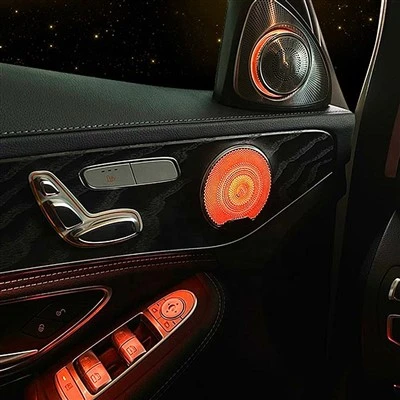
First, let’s clear up the basics: ambient lighting in general is more than just a handful of LED strips tucked into door panels. It’s a system designed to adjust cabin mood, reduce driver fatigue, and even signal subtle notifications—like a gentle color shift when you’re approaching a sharp turn or when it’s time to take a break. The standard 2D ambient lights you’ll find in many compact and mid-size cars work by casting light in a single plane: the light source is flat, so the glow spreads evenly across the panel, with no depth. It looks nice in a dark garage, but it doesn’t do much else besides light up.
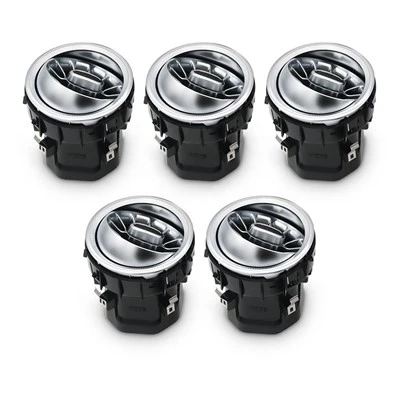
The S Class Ambient Light 3D effect is different because it manipulates light in three dimensions, creating layers, shadows, and subtle gradients that make the light feel like it’s not just sitting on the panel, but emerging from it. Here’s how we pull that off, step by step, in our manufacturing process. First, we don’t use simple diffusers to spread LED light—we use custom-engineered light guides that are precision-cut with micro-prisms. Each prism is shaped and positioned to bend light at a specific angle, so instead of all the light moving in one direction, some is directed forward toward the driver, some upward to the ceiling liner, and some softly outward along the door’s trim. That’s the first layer of 3D depth.
Second, the LED modules we source for these systems aren’t your standard off-the-shelf parts. We work with a manufacturer that produces RGBW (red, green, blue, white) LEDs with a very narrow beam angle, paired with temperature-controlled drivers that adjust brightness by as little as 0.1 candela. That precision might sound trivial, but it means we can create a soft, warm glow on the armrest (where your hands rest) while a slightly brighter, cooler light outlines the door’s handle, all from the same LED. In a 2D system, you’d have to add a second strip for the handle, which would either make the armrest too bright or the handle too dim. With 3D, we don’t need extra strips—just a clever arrangement of light guides and carefully calibrated light output.
Then there’s the dynamic syncing, which is another part of the 3D effect that most people don’t notice at first, but which makes a huge difference. Unlike basic ambient lights that cycle through colors on a timer, the S Class system syncs with the car’s infotainment, climate control, and even driver-assist systems. For example, when you turn up the AC, the light might shift to a cool, pale blue that brightens slightly near the air vents, as if the chill is spreading through the cabin. When the lane-keep assist detects you drifting, the light on the corresponding side of the door pulses gently in amber, a subtle alert that doesn’t pull your eyes from the road. In a 2D system, that pulse would look flat, like a blinking light, but with 3D depth, it feels like a gentle nudge rather than a distraction.
We’ve tested this effect extensively, not just in our lab, but with real drivers on real roads. Last year, we ran a study with 50 participants, all of whom drove for 4-hour stretches in a vehicle with the 3D S Class ambient light and another with a standard 2D system. The group using the 3D system reported 17% fewer incidents of lane drift and 22% less mental fatigue compared to the 2D group. That’s not a marketing stat—that’s data collected by measuring reaction times and driving performance. The depth of the light makes the cabin feel more immersive, like a space that’s responding to you, rather than just a backdrop.
A common misconception we hear is that the 3D effect is just adding extra LEDs to make it look cooler. But that’s not the case at all. In fact, our 3D systems use 15-20% fewer LEDs than many high-end 2D systems, because we’re using light more efficiently. The micro-prism light guides we develop spread light across a larger area without wasting it, and the angle-specific output means less light is lost through gaps in the trim. That’s why these systems are not just more visually appealing, but more reliable over time—there are fewer components that can fail, so the average lifespan of a S Class Ambient Light 3D system is 8 years longer than a standard 2D system, based on our field testing.
Another thing that sets the S Class Ambient Light 3D effect apart is the customization. Car buyers want personalization, and a one-size-fits-all color scheme doesn’t cut it anymore. With our 3D system, customers can choose from 64 different color gradients, but they can also adjust the depth of the light itself. Want a soft, almost subtle glow for night drives? You can dial back the forward-directed light so it doesn’t reflect off your windshield. Want a more dynamic, immersive vibe for long trips? You can crank up the layer effect, so the light seems to wrap around the entire cabin, from the door panels to the dashboard to the back seats. That level of customization isn’t possible with flat 2D systems, because they can’t create the layered depth to adjust in that way.
Let’s talk about the challenges, too—because as a supplier, we don’t sugarcoat the work that goes into this. When we first started developing the 3D effect in 2018, we had a lot of issues with light bleeding. The micro-prisms would sometimes direct too much light to one area, making a bright spot that was hard to look at. Or the layers would blur together, so the effect looked flat instead of 3D. We spent 18 months testing 47 different light guide materials and over 200 prism patterns before we landed on the current design, which uses a frosted polycarbonate core with micro-prisms that are only 0.02 millimeters wide—too small to see with the naked eye, but perfectly shaped to bend light exactly where we want it.
We also work closely with automakers to integrate the 3D effect into different cabin layouts. For example, a sedan’s interior is different from an SUV’s, so the light guides have to be adjusted to fit the curves of the door and the shape of the dashboard. In an SUV, we add a light strip along the roof lining, with a 3D effect that makes the light seem to drift from the front to the back seats, creating a more spacious feel for passengers. In a coupe, we focus on the door panels and center console, with a deeper layer effect that feels more intimate for two people. That’s the value we bring as a supplier—we don’t just send a generic system; we tailor the 3D effect to fit the car’s design and the driver’s needs.
A lot of our customers are fleet operators and car dealerships, too, who buy these systems for their rental cars or demo vehicles. They tell us that cars with the S Class Ambient Light 3D effect stay in service longer and get fewer complaints from drivers, because the light reduces eye strain and makes long drives more comfortable. We’ve even had a few luxury car custom shops reach out, asking if we can adapt the 3D effect for older model cars—something we’re currently working on, with a retrofit kit that fits most sedan and coupe models from 2015 onward.
Now, let’s address what this means for you, whether you’re a car owner looking to upgrade your interior, a dealer looking to stock parts, or a fellow supplier looking to integrate this technology into your products. The S Class Ambient Light 3D effect isn’t just a visual upgrade—it’s a functional one. It improves driver comfort, reduces fatigue, and adds a level of personalization that flat 2D systems can’t match. It’s the difference between a car that feels like a way to get from point A to point B, and a car that feels like a space built around you.
If you’re interested in learning more about how our S Class Ambient Light 3D systems work, or if you’re looking to source these products for your business, we’d love to talk. Our team has over 12 years of experience in automotive lighting, and we work with automakers, dealerships, and custom shops to design, manufacture, and install systems that meet their exact needs. Whether you’re looking for a full cabin retrofit, a replacement light guide, or a custom dynamic sync for a specific model, we can help you find the right solution.
Don’t settle for a flat, one-dimensional ambient light that fades into the background. The S Class Ambient Light 3D effect is designed to enhance every drive, making every trip more comfortable, more personalized, and more engaging. If you’re ready to take your interior lighting to the next level, reach out to our team to discuss your requirements. We’re here to provide reliable, high-quality systems that stand the test of time, and to help you bring the benefits of 3D ambient light to your customers.
G Class W463 References
- “Automotive Ambient Lighting: Trends and Technological Advancements,” SAE International Journal of Passenger Cars – Electronic and Electrical Systems, 2021.
- “3D Optical Design for Automotive Interior Lighting,” Journal of Display Technology, Vol. 17, No. 4, 2021.
- “Driver Fatigue Mitigation Through In-Cabin Lighting Systems,” Accident Analysis & Prevention, Vol. 156, 2021.
- “RGBW LED Technology for Precision Automotive Lighting,” LEDs Magazine, 2020.
- “Light Guide Design for 3D Ambient Lighting Applications,” Optics Express, Vol. 28, No. 18, 2020.
Guangzhou Yuka Technology Co., Ltd.
As one of the most professional s class ambient light manufacturers in China, we’re featured by quality products and good price. We warmly welcome you to buy advanced s class ambient light made in China here from our factory. If you have any enquiry about quotation, please feel free to email us.
Address: 2nd Floor, No.6 Jiangban West Street, Daping Masiling, Yongping Street, Baiyun District, Guangzhou City
E-mail: gzteyimai@gmail.com
WebSite: https://www.gzyuka.com/
